
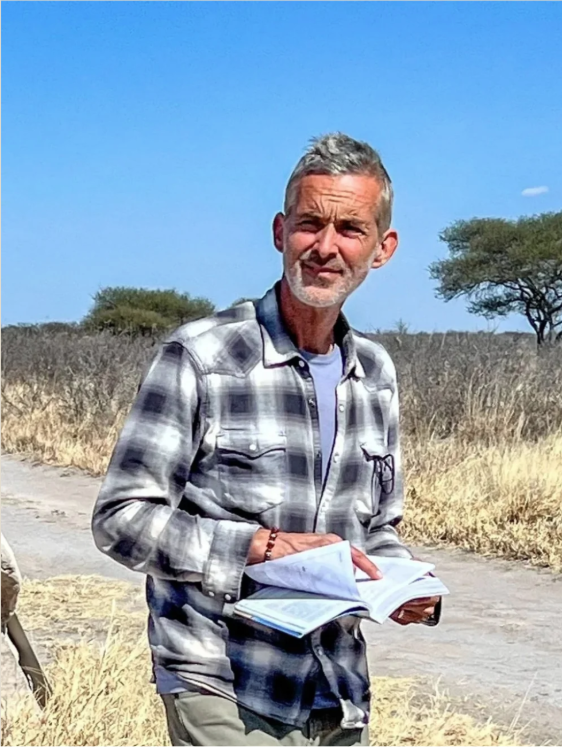
Allan Hancock College film studies instructor Tim Webb recently completed a short documentary for a nonprofit organization in Namibia. Photo courtesy Allan Hancock College.
Click here for the entire media release en español
SANTA MARIA — What began as a personal connection during a trip to southern Africa has become a documentary project aimed at protecting one of the world’s most unique ecosystems and the Indigenous communities who call it home.
Allan Hancock College film studies instructor Tim Webb recently completed a short documentary for Himbaland Indigenous Conservation, a nonprofit organization working in the remote Namib Desert of northwestern Namibia. The film was created to help the organization share its story with a broader audience and support fundraising efforts focused on community development and wildlife conservation.
Rather than producing a traditional documentary, Webb designed the film as a storytelling tool for the nonprofit, introducing viewers to the people, landscape, and conservation challenges facing one of Africa’s oldest desert regions.
“The goal was to tell the story of the community and the work they’re doing so they can use the film to extend the reach of their fundraising efforts,” Webb said. “Film has always been my way of bringing together storytelling, advocacy, and international development.”
Webb first visited Namibia several years ago, where he met local community leaders and learned about the growing environmental pressures facing the region. Longer droughts, unpredictable flooding, and increasing human-wildlife conflict threaten both the traditional Himba way of life and vulnerable species such as desert-adapted elephants.
Unlike many conservation efforts around the world, Namibia has become an international model for Indigenous-led wildlife management, with local communities taking a leading role in protecting natural resources while creating sustainable economic opportunities.
One of Himbaland Indigenous Conservation’s current projects is developing an elephant-proof community garden that provides a reliable food source while reducing conflict between wildlife and residents.
“If the local community doesn’t have a stake in protecting the wildlife, those animals won’t survive,” Webb said. “What’s exciting is that Namibia has created a model where conservation is truly in the hands of the people who live there.”
Webb and his family spent nearly two months filming in the Namib Desert, often working in extremely remote conditions with no electricity, internet service or reliable running water. Sandstorms, extreme temperatures, and limited opportunities to recharge camera equipment required extensive planning before production even began.
The experience also provided Webb with an opportunity to test the same professional Sony digital cinema equipment now used by students in Hancock’s film production courses.
“Being out in the field and working with new cameras, lenses, sound equipment, and post-production technology gives me firsthand experience that I can immediately bring back into the classroom,” Webb said. “It helps me give students a much more current and nuanced understanding of both the technology and the creative decisions involved in filmmaking.”
The documentary was completed during Webb’s sabbatical, which also included visits to the American Film Institute and British Film Institute, where he studied emerging trends in documentary filmmaking and connected with filmmakers from around the world.
For Webb, documentary filmmaking has always been about more than simply capturing compelling images.
“Documentary gives you the opportunity to become part of a community and work collaboratively to tell its story,” he said. “That’s what has always drawn me to this kind of filmmaking.”
Webb has taught film studies and film production at Allan Hancock College for more than two decades. His courses include film history, film aesthetics, and digital film production, where students gain hands-on experience with professional filmmaking equipment while learning the artistic and technical foundations of visual storytelling.
The documentary will soon be available through the Himbaland Indigenous Conservation website and will serve as a centerpiece of the organization’s outreach and fundraising efforts.