
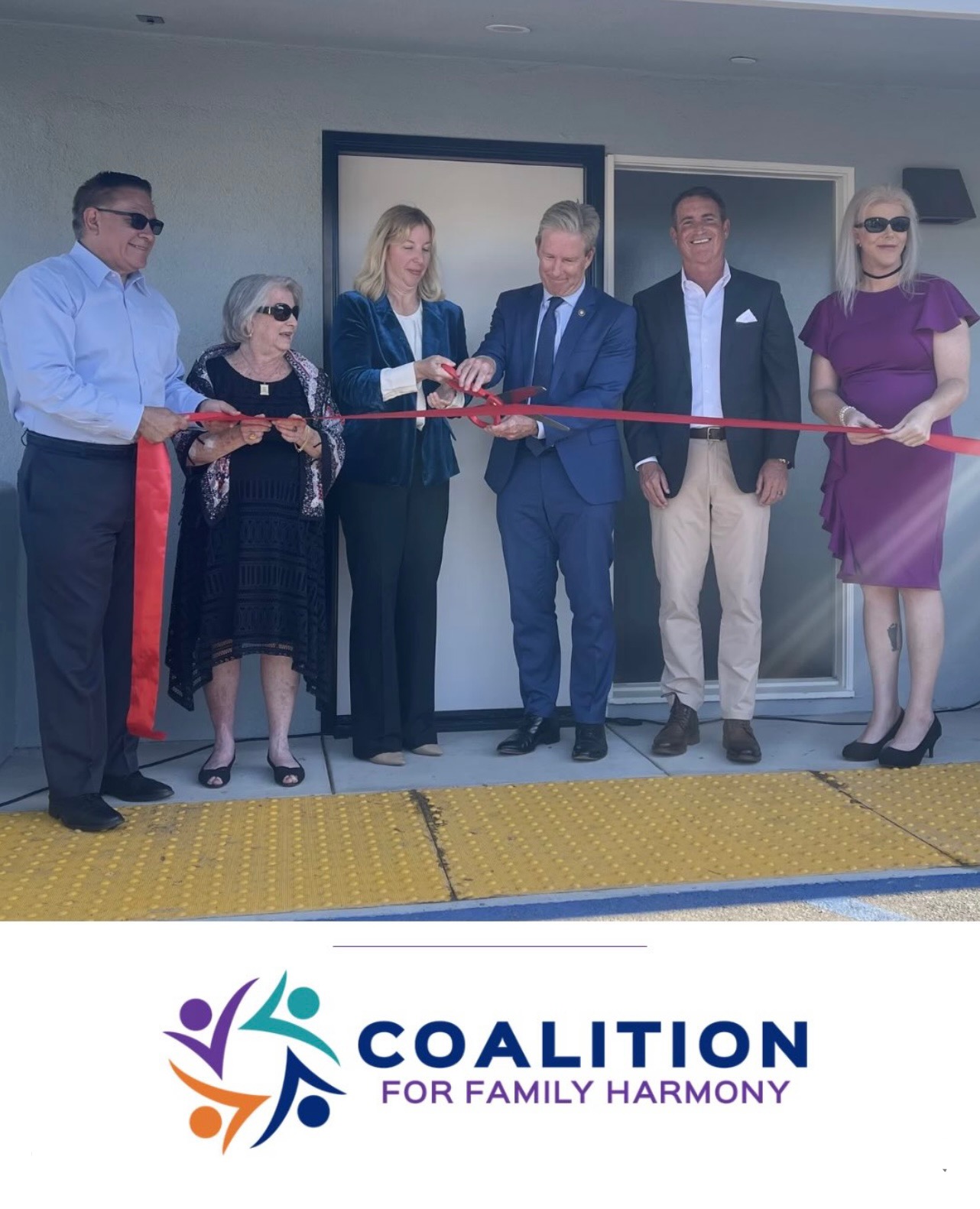
Image of ribbon cutting of its third emergency shelter in Ventura County courtesy of the Coalition for Family Harmony.
VENTURA COUNTY — October is Domestic Violence Awareness Month, an opportunity to increase awareness about abuse, recognize the barriers survivors often face and remind our community that help is available. The Coalition for Family Harmony operates the only rape crisis center in Ventura County and provides services to survivors of domestic violence and sexual assault throughout the county.
The Coalition’s services include a 24-hour crisis hotline, emergency shelter, counseling, legal advocacy, housing assistance and prevention services. In addition to operating the county’s only rape crisis center, the Coalition currently operates three domestic violence emergency shelters, including specialized shelter services designed to address the needs of Indigenous-language-speaking survivors and a newer emergency shelter located at the Ventura County Family Justice Center.
What are some signs of domestic violence that people may not recognize as abuse?
Domestic violence does not always involve physical violence. Abuse is often about power and control and can include emotional, financial, sexual and technological abuse.
Warning signs may include extreme jealousy, isolating someone from friends or family, controlling where they go or whom they speak with, monitoring their phone or social media, preventing them from working or attending school, controlling household finances, threatening children or pets, humiliating them or making them feel afraid in their own home.
These behaviors can develop gradually, which sometimes makes them difficult for the person experiencing them — and for friends and family — to recognize as abuse.
Why can it be so difficult for someone to leave an abusive relationship?
Leaving an abusive relationship is much more complicated than simply deciding to walk away.
A survivor may fear retaliation, worry about the safety of their children or pets, have nowhere else to live or lack access to money and transportation. An abusive partner may control bank accounts, identification documents, employment or communication with family and friends.
Survivors may also still love their partner or hope the abuse will stop.
Importantly, leaving can be a particularly dangerous time because an abusive partner may escalate their behavior when they believe they are losing control. That is why safety planning and support from trained advocates can be so important.
What additional barriers can Spanish-speaking, immigrant and Indigenous-language-speaking survivors face when seeking help?
Language can be a significant barrier when someone is trying to understand their options or communicate during a crisis.
Some survivors may also worry about their immigration status, distrust government systems, have limited transportation or financial resources, or fear that seeking help could affect their children or family.
For people who speak Indigenous languages, finding culturally and linguistically appropriate services can be even more challenging.
No one should have to remain in an unsafe situation simply because they do not speak English or are unsure where to turn. Connecting survivors with advocates who understand these barriers can help them explore their options and make informed decisions about their safety.
What should someone do if they believe a friend or family member is experiencing domestic violence?
Start by listening without judgment.
Avoid asking, “Why don’t you just leave?” Leaving may not be safe or possible at that moment, and the survivor is the person who understands their situation best.
Instead, let them know you believe them and that they are not alone. Ask what kind of help they would like rather than making decisions for them.
You can also help them connect with a domestic violence advocate, find information about available resources or develop a safety plan.
Even if someone is not ready to leave, continuing to be a supportive and trustworthy person in their life can make an important difference.
What happens when someone reaches out to the Coalition for Family Harmony?
A survivor does not need to have everything figured out before asking for help.
The Coalition for Family Harmony can help people explore their options and connect them with services based on their individual circumstances. Services include a 24-hour crisis hotline, emergency shelter, counseling, legal advocacy, housing assistance and other support for survivors of domestic violence and sexual assault.
The Coalition currently operates three domestic violence emergency shelters in Ventura County, including specialized shelter services designed to address the needs of Indigenous-language-speaking survivors.
If you or someone you know needs help, contact the Coalition for Family Harmony’s 24-hour hotline at 1-800-300-2181. In an immediate life-threatening emergency, call 911.