June 27 through Oct. 17 — Santa Barbara Museum of Art (SBMA) to present exhibit ‘Martin Mull: The Joys of Indoor/Outdoor Living’

First Major Museum Exhibition of Mull’s Artwork to be Curated by Actor and Musician Steve Martin and Ann Philbin, Director Emerita of the Hammer Museum

SANTA BARBARA — The Santa Barbara Museum of Art (SBMA) announced today that it is organizing the exhibition Martin Mull: The Joys of Indoor/Outdoor Living, curated by Steve Martin and Ann Philbin, set to run next year from June 27 to October 17, 2027.
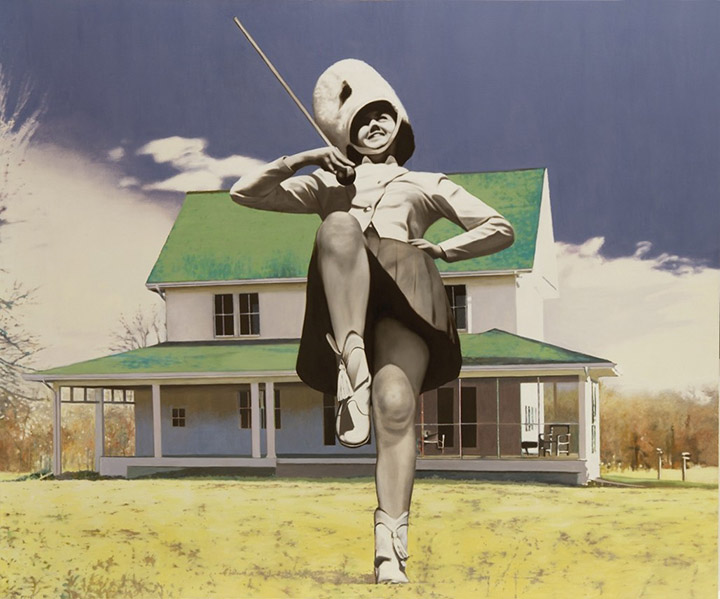
Credit: Martin Mull, October (Majorette), 2007. Oil on linen, 60 x 72 in. Collection of Claudia and Kevin Bright. © Estate of Martin Mull.
Martin Mull (1943–2024), well known as an actor, comedian, and musician, studied painting at the Rhode Island School of Design in 1967 and throughout his long entertainment career never stopped making and exhibiting his art. This will be the first major museum exhibition of Mull’s artwork in 20 years.
“We are excited to be presenting this exhibition of the work of Martin Mull at SBMA,” said Amada Cruz, Eichholz Foundation Director and CEO of the Santa Barbara Museum of Art. “For many, the exhibition will be a surprising introduction to this iconic actor’s painting practice. The show is conceived by Ann Philbin, Director Emerita of the Hammer Museum, and Mull’s longtime friend and enthusiast Steve Martin. Philbin and Martin will co-curate in close collaboration with our own Chief Curator, James Glisson. The exhibition will be the centerpiece of the Museum’s summer program in 2027 and continues the SBMA legacy as a place of discovery and the unexpected.”
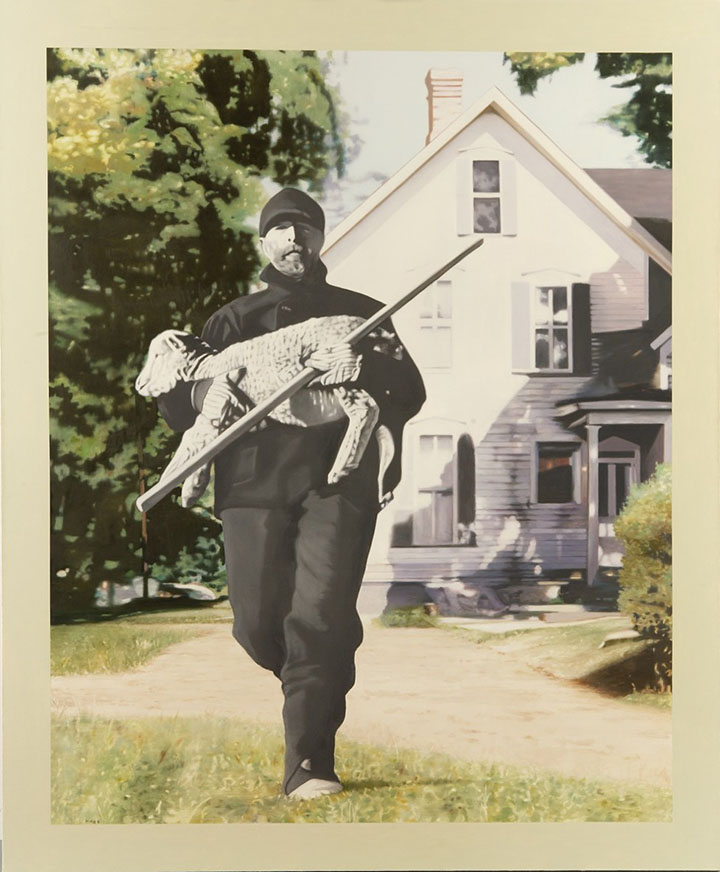
Credit: Martin Mull, Shepherd, 2006. Oil on linen, 72 x 60 in. Private Collection. © Estate of Martin Mull.
This presentation will feature Mull’s cool, surreal, and often dark takes on postwar American life. Extraordinarily skilled with a brush, Mull combined scenes drawn from his childhood in the Midwest and sourced from old photographs to create physically impossible situations. Women float above trains, streets transform into rivers with splashing swimmers, or tightrope walkers scale tiny bedrooms. Frequently set in the newly built suburbs of 1950s and 1960s, these paintings undercut the period’s consumerism and homogeneity, when economic growth fueled a baby boom and better standards of living. They depict an underbelly of tension and darkness behind the prosperity of postwar “white culture” in America.
“Martin Mull’s work as an artist will certainly be his primary legacy,” said Steve Martin. “After a full-time career in painting, in the last twenty years of his life with his technical gifts fully developed, Martin’s art coalesced into tight, narrative paintings of a peculiar nature. Combining surreal elements with family idioms, he formed his own worried portrayal of American life.”