MUSIC ACADEMY OF THE WEST UNVEILS “THE MUSE”: A NEW KIND OF PERFORMANCE SPACE DESIGNED TO INSPIRE FROM WITHIN
|
Lawrence Scarpa, lead architect for The Muse, and Brooks Scarpa Huber, turn architecture into an instrument — designing a space that moves, resonates, and inspires like music itself
|
Special Sneak Peek at The Muse as part of Santa Barbara’s 1st Thursday Art Walk on May 7
|
SANTA BARBARA—The Music Academy of the West has revealed updated details behind The Muse, its forthcoming Music Education Center in the heart of downtown Santa Barbara — an architecturally ambitious project designed not just to house music, but to make inspiration visible, tangible, and shared across the city. On May 7, from 5 to 8 p.m., the public is invited to step inside that vision during a special Sneak Peek at The Muse as part of Santa Barbara’s 1st Thursday Art Walk.
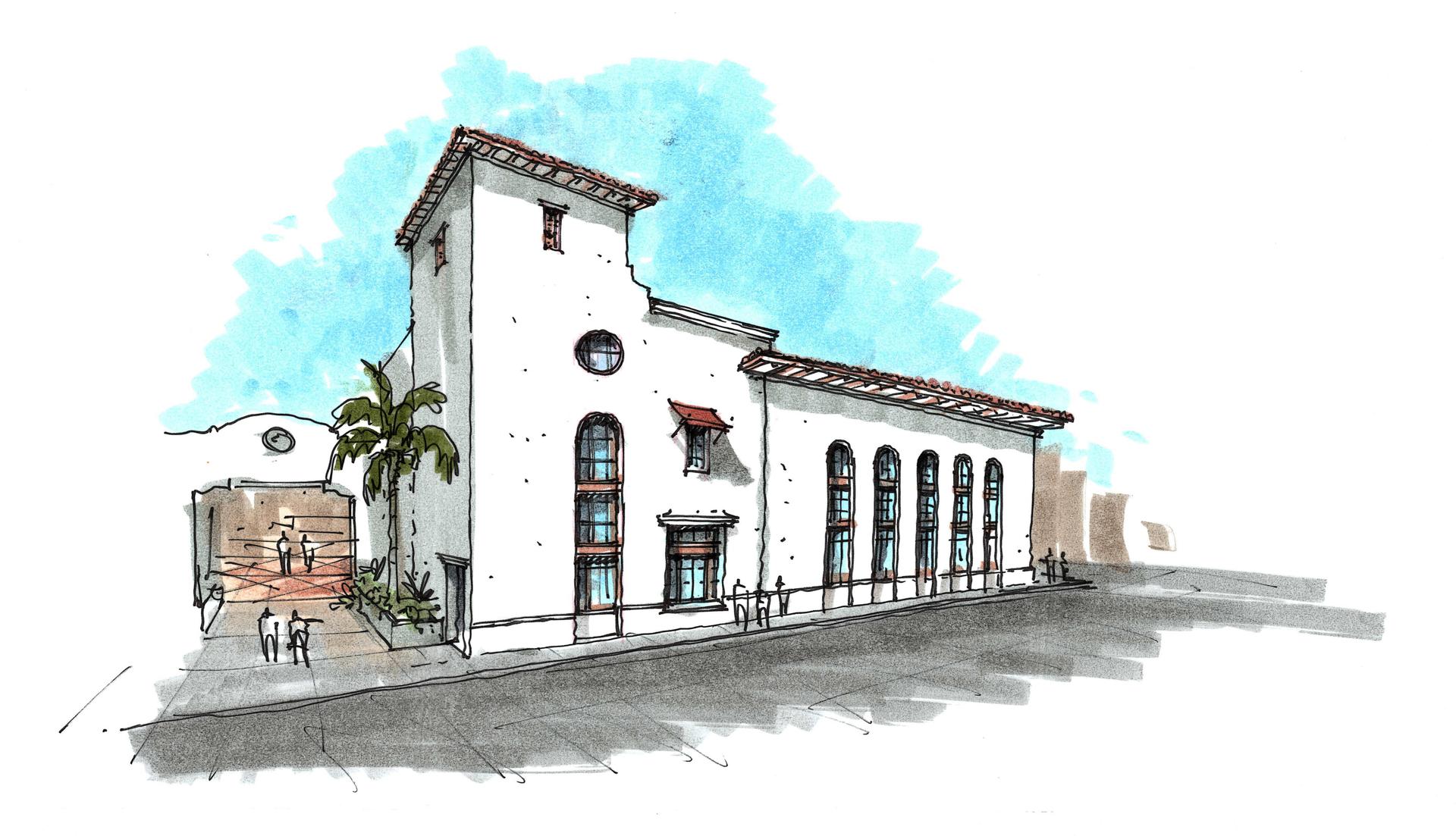
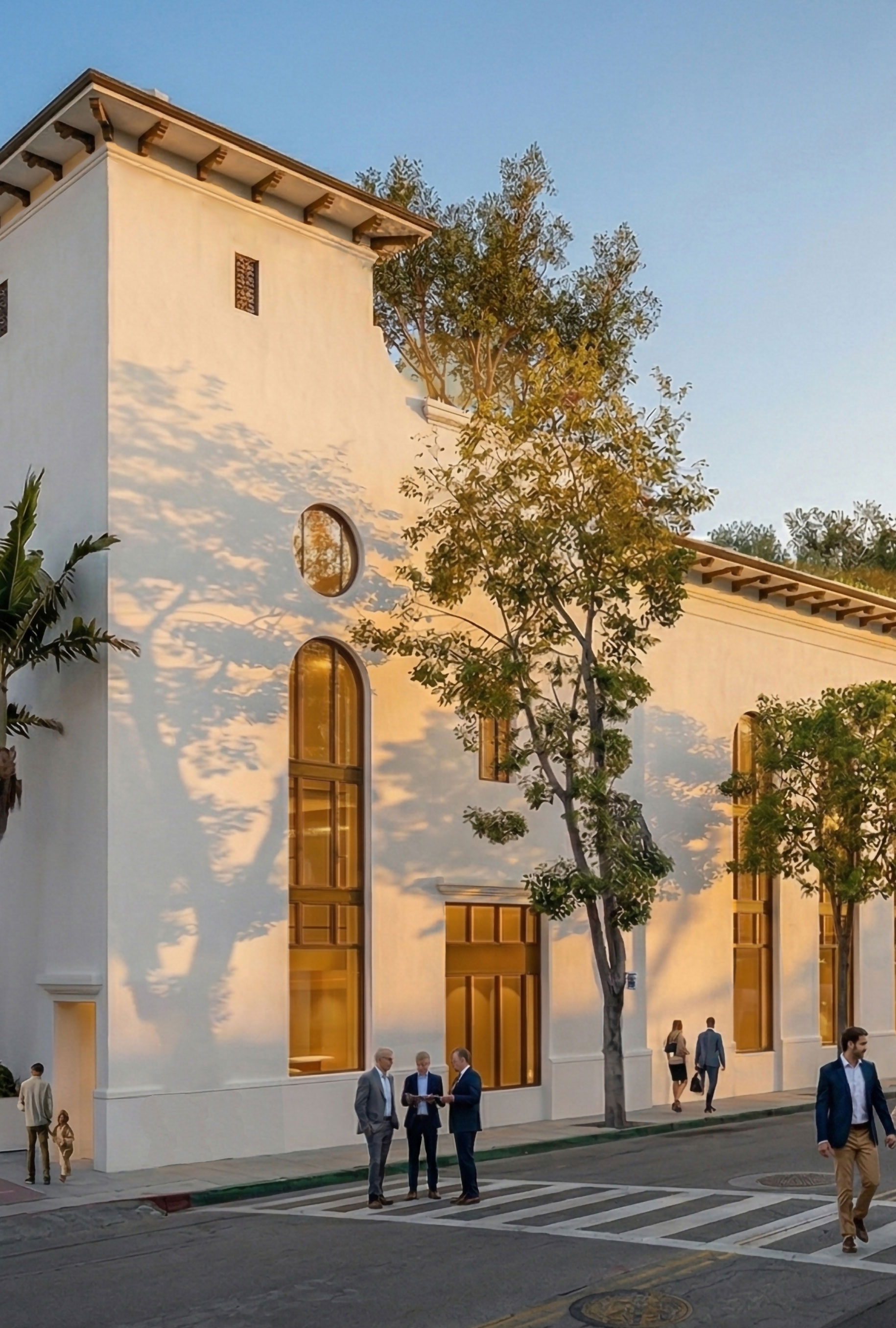
Located at 901 State Street and scheduled to open in summer 2028, The Muse will extend the Music Academy’s Montecito campus and mission into the heart of downtown. Designed by acclaimed architect Lawrence Scarpa and Brooks Scarpa Huber, and named by Cheryl Goldberg, Founding Contributor to the Center and a member of the Music Academy’s Board of Directors, The Muse is envisioned as a vibrant home for music education and performance, welcoming artists and audiences of all ages through year-round programming and shared musical experiences. During the May 7 Sneak Peek, Music Academy team members will share architectural renderings, answer questions, and offer visitors a first look at how the future center will support performance, education, and community connection.
“In classical antiquity, the Muses were deities who inspired artists in their creative endeavors.” said Goldberg. “Today, a Muse can be anyone or anything that inspires someone to imagine and create art. In this case, our intention is for the building itself to be a Muse — a place that enables artists to realize their creative potential. It will also be a place where artists, families, audiences, and the community can come together around music in ways that are joyful, meaningful, and lasting. I’m incredibly honored and excited to be part of the Music Academy as it brings that vision to life.”
In selecting Lawrence Scarpa and Brooks Scarpa Huber, the Music Academy enlisted a design partner whose work unites artistic imagination with civic purpose. Renowned for architecture that is inventive, sustainable, and deeply responsive to the people and places it serves, Scarpa has built a distinguished body of work that rethinks what public-facing spaces can be. He is the recipient of the 2022 American Institute of Architects Gold Medal, the institute’s highest honor.
The Muse reimagines what a performance space can be: not a closed venue, but a living, breathing civic experience — one that blurs the boundaries between artist and audience, interior and street, structure and sensation. At the heart of Scarpa’s vision is a simple but powerful idea: the building as a “jewel box.”
“We thought of The Muse as something you open,” said Scarpa. “From the outside, it’s restrained — but inside, there’s a sense of discovery. The experience unfolds.”
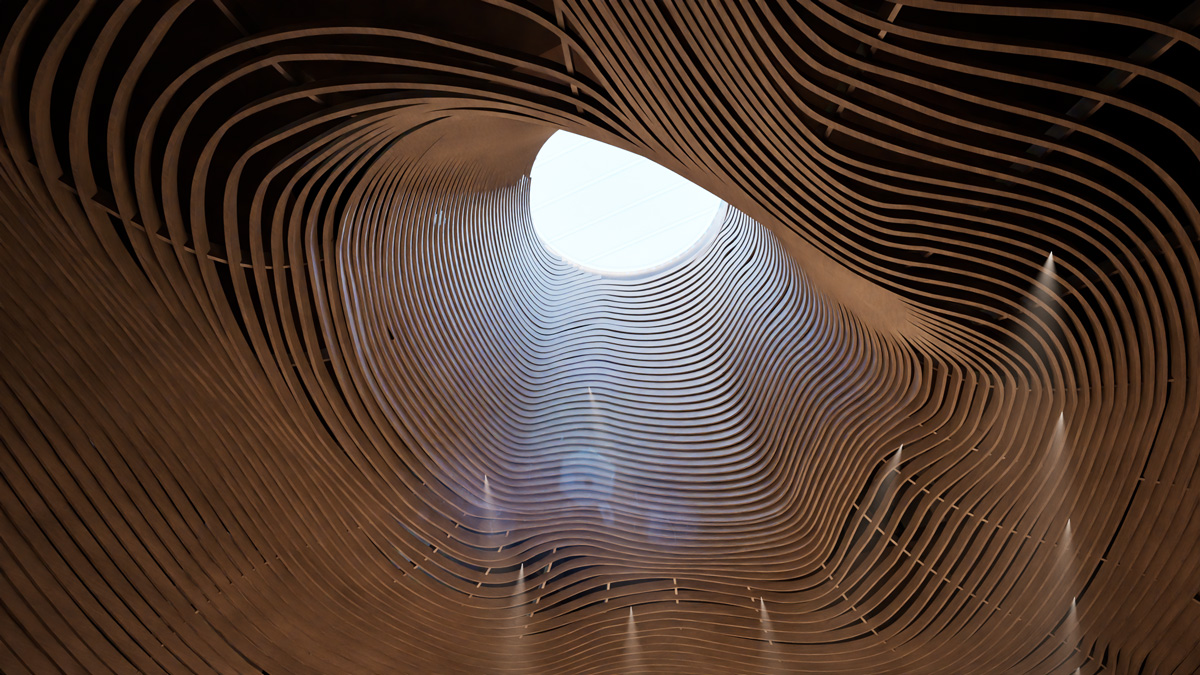
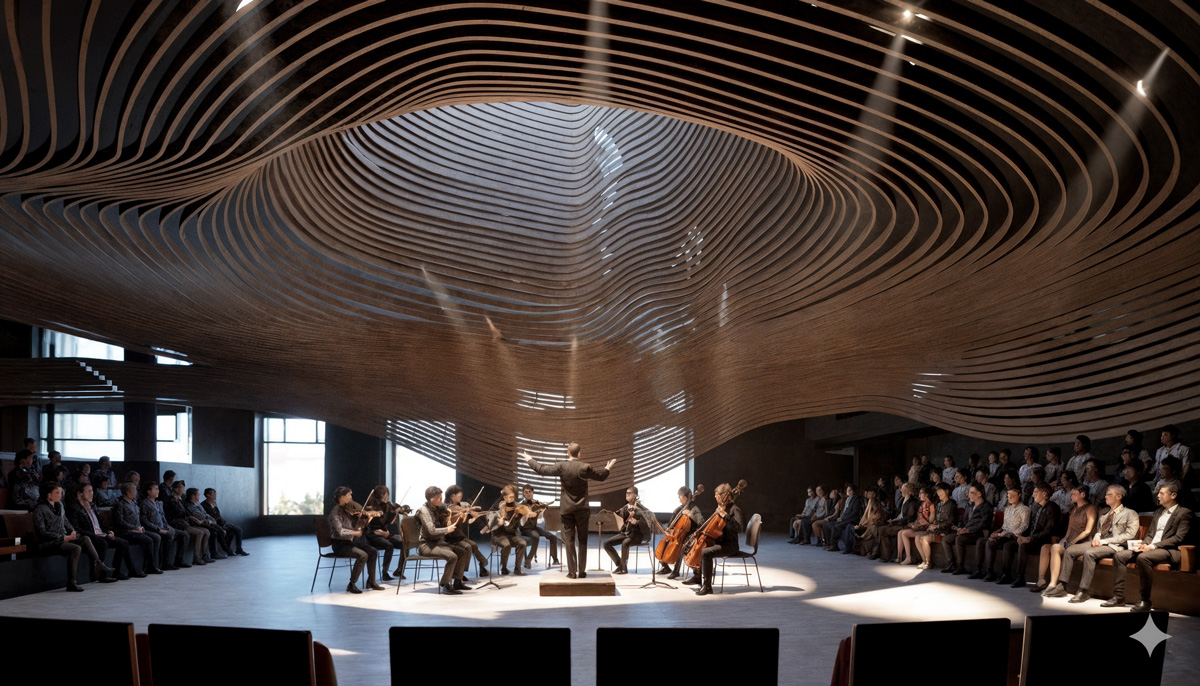
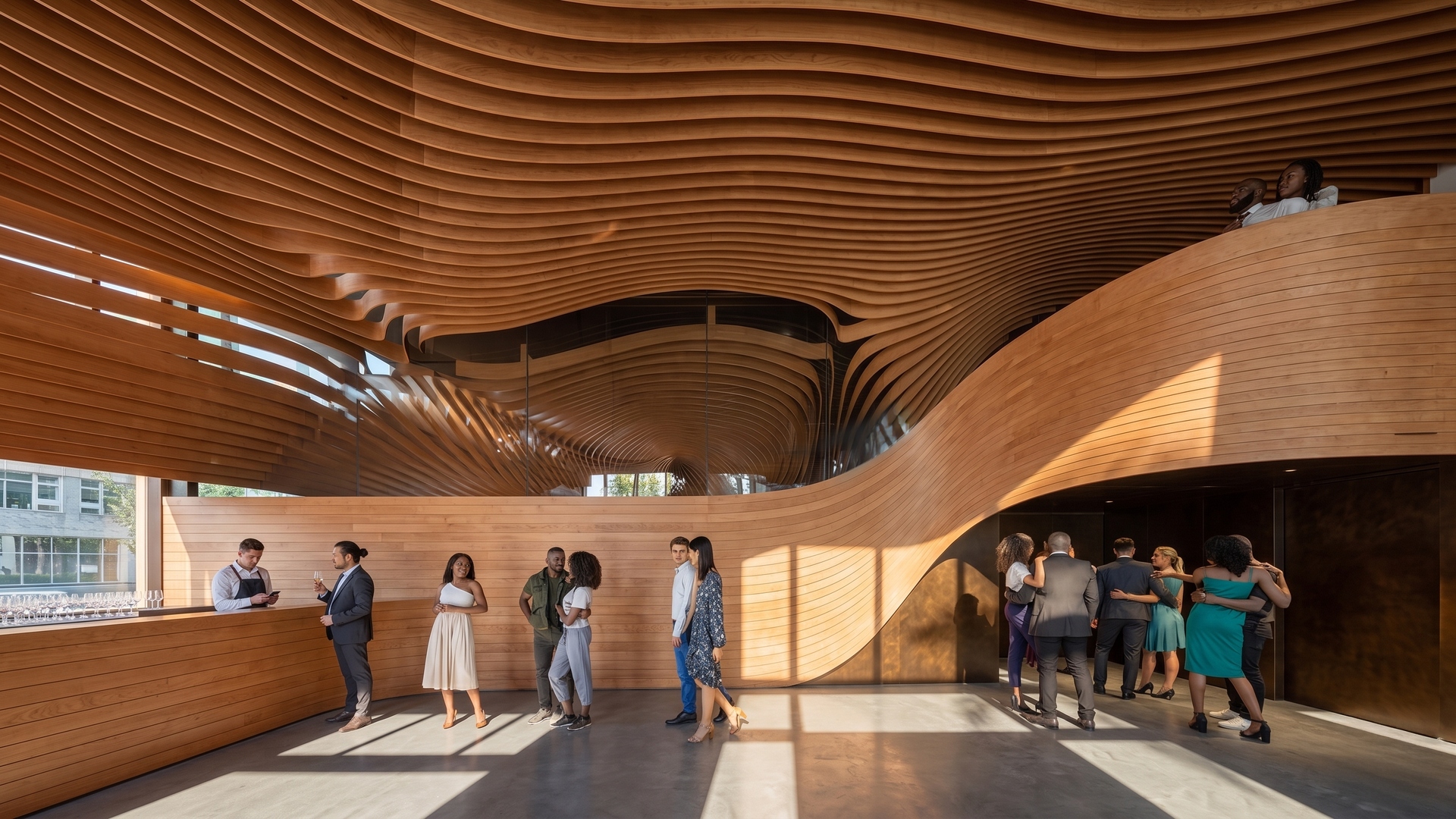
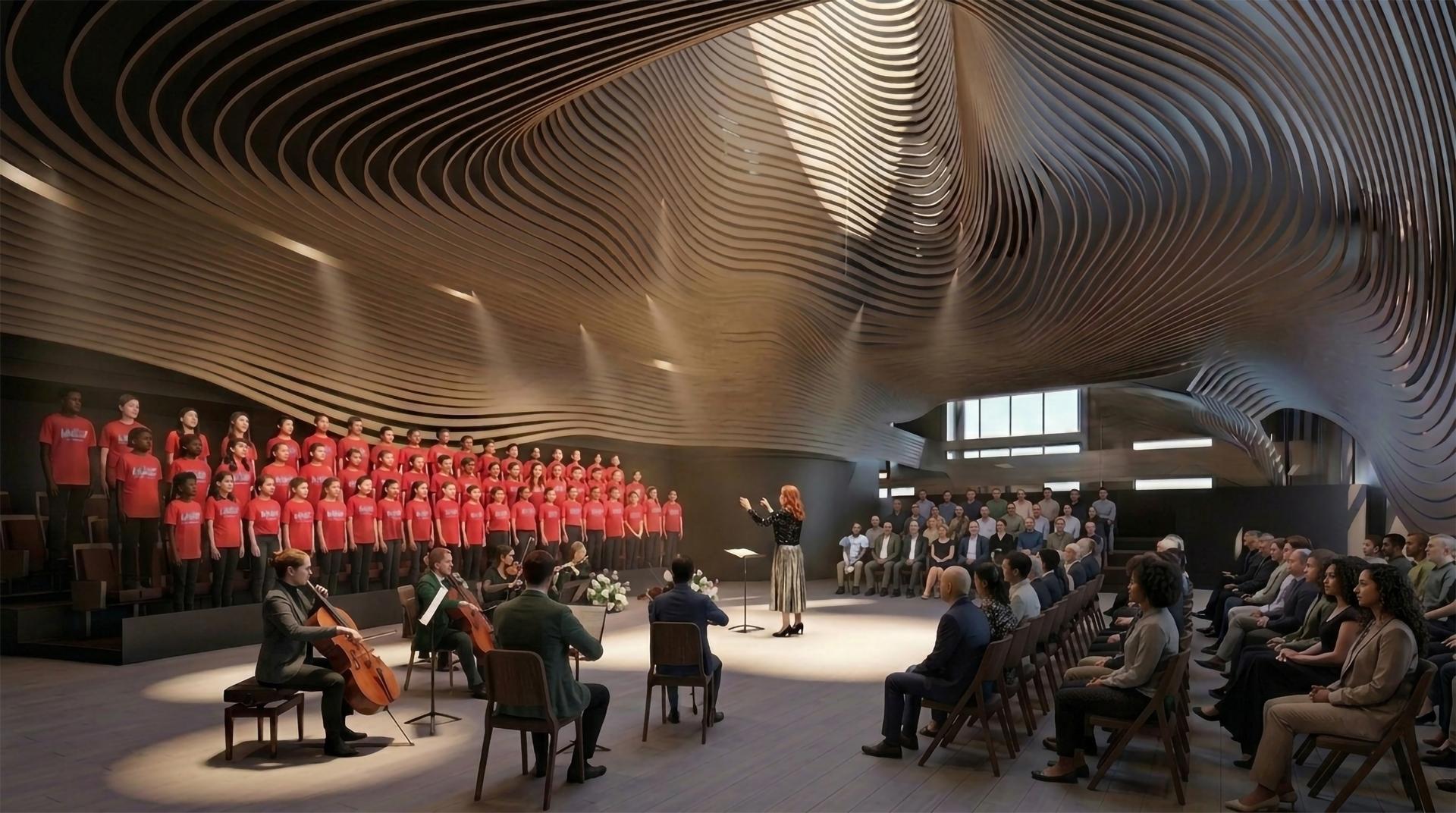
Rather than making a bold external statement, the design focuses inward — where a luminous, sculptural interior transforms the space into what Scarpa describes as an architectural “aurora.” Inspired by the movement of a musical score, the interior’s flowing lines wrap the performance space in warm, undulating wood forms, creating a visual rhythm that mirrors the cadence of music itself.
|
Architecture That Moves Like Music
The Muse is designed to be experienced in motion — physically and emotionally. A dramatic skylight floods the central performance space with natural light, casting shifting patterns of shadow and illumination that evolve throughout the day.
“Architecture and music share the same language — cadence, balance, flow,” Scarpa explained. “We wanted people to feel that connection the moment they walk in.”
The result is a three-dimensional, immersive environment where the act of listening becomes spatial. Students, performers, and visitors can observe and engage from multiple vantage points throughout the building, transforming it into both a performance venue and a living classroom.
|
Opening the Arts to the Street
In a departure from traditional concert halls, The Muse is intentionally porous — designed to engage the public beyond its walls. Large windows offer glimpses into rehearsals and performances, turning the building itself into a street-level stage.
During intermissions, audiences are expected to spill out onto State Street, activating the surrounding neighborhood and extending the performance into the public realm. “It becomes part of the life of the street,” Scarpa said. “People walking by can see in, feel the energy, and become part of it — even if they’re not inside.” This civic-minded approach reflects a broader vision: positioning The Muse as a cultural anchor in downtown Santa Barbara and a catalyst for community connection.
|
A Building of Discovery
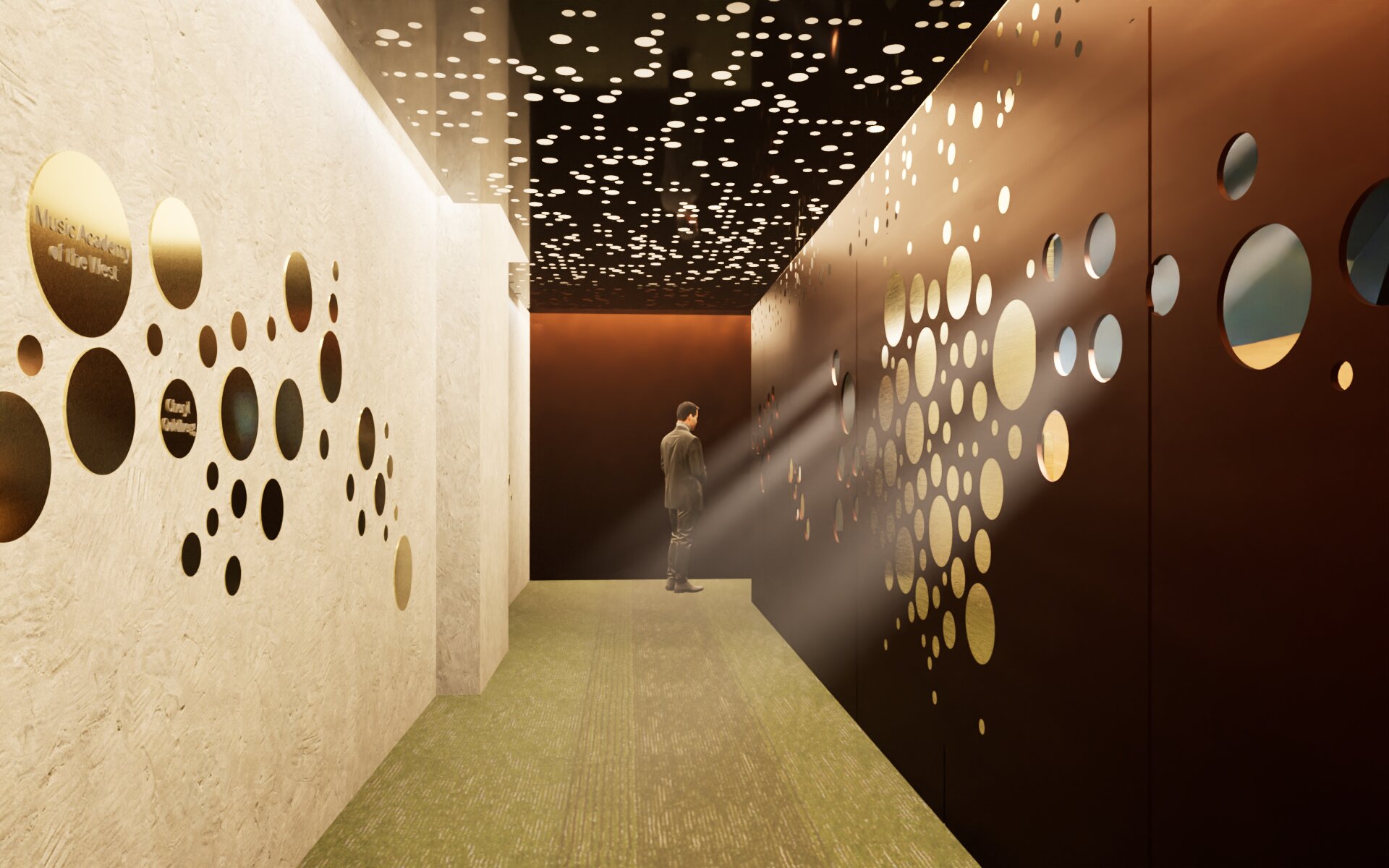
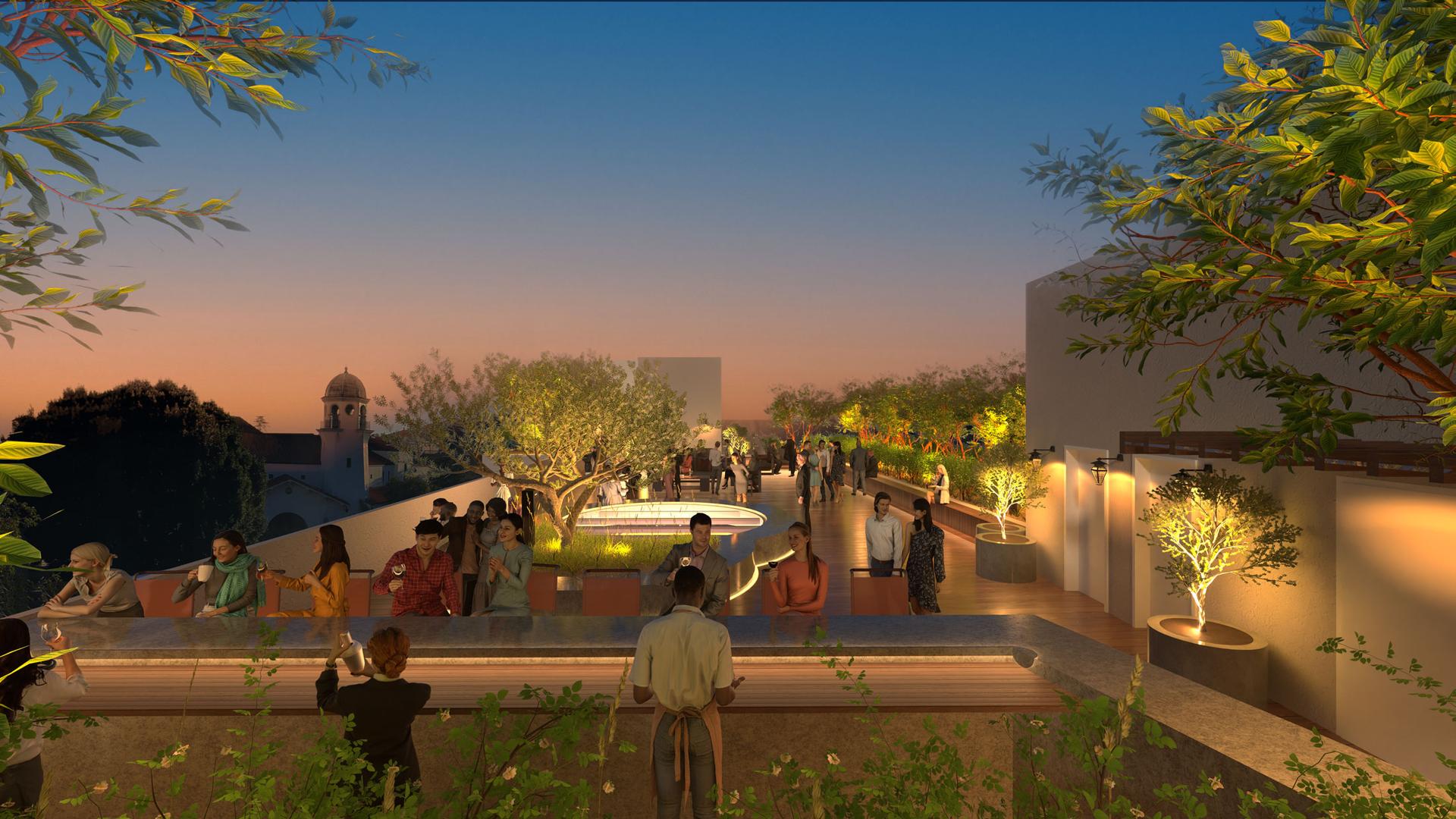
Inside, the building unfolds as a sequence of experiences. A mezzanine-level “donor walk” blends exposed concrete with floating bronze elements, creating a dialogue between past and present. From there, guests move into a light-filled lounge overlooking the performance space — offering moments of pause, gathering, and reflection. Even the building’s constraints — its compact footprint and adaptive reuse of an existing structure — have been embraced as creative opportunities. “There’s a charm in working within limitations,” Scarpa noted. “It’s not perfect — and that’s what makes it special.”
|
Designing for Memory, Not Just Form
For Scarpa, success isn’t measured in aesthetics alone, but in emotional impact.
“If you think about a place that mattered to you, you may not remember exactly what it looked like — but you remember how it felt,” he said. “That’s what we’re trying to create — an experience that stays with you.”
This philosophy extends to the building’s tactile qualities. The warm, curved wood interior invites touch — encouraging a deeper, more personal connection between visitor and space.
“People don’t usually touch buildings,” Scarpa added. “But when they do, it creates a lasting memory.”
|
Sustainability as Standard Practice
Sustainability is deeply embedded throughout the project, though not positioned as a headline feature. The building incorporates solar energy, stormwater capture and reuse systems, and native, drought-tolerant landscaping.
“We don’t treat sustainability as a design concept — it’s just the right thing to do,” Scarpa said.
|
A Space Where Art Meets Community
As The Muse moves toward its opening in 2028, it represents more than a new performance space — it signals a shift in how cultural institutions engage with their communities.
By bringing performance, education, and public life into a shared architectural experience, the Music Academy of the West is creating a space where inspiration is not confined to the stage — but felt throughout the building, and beyond.
“When you can create something beautiful that also has purpose,” Scarpa said, “that’s a win-win.”
|
The Muse Sneak Peek: Santa Barbara 1st Thursday Art Walk
May 7, 5–8 PM
|
|
|
|