
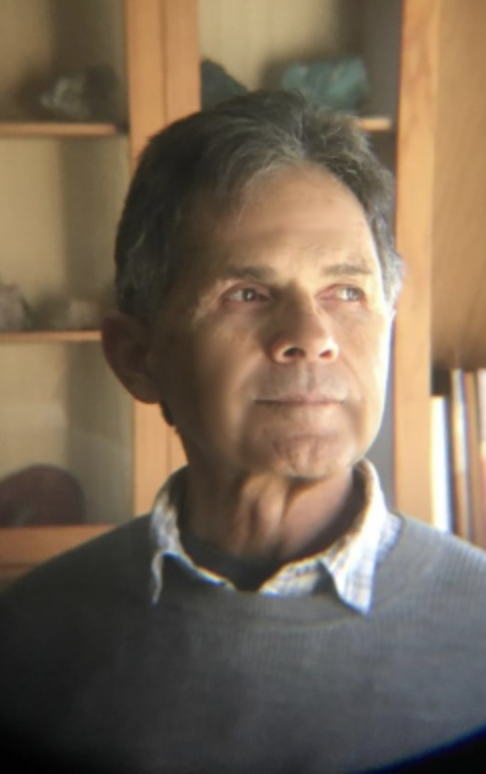
 By David Magallanes • Guest contributor
Watching Artemis II loop around the Moon and come home felt like I too had “come home.” Some of us in my generation used to get up at 3 a.m. to watch the electrifying launches of the missions with god-like names: Mercury, Gemini, and Apollo. We would watch with focused fascination the black-and-white images on our small TV screens, never imagining that our grandchildren some 50 years later would be seeing mesmerizing high-definition, full-color feeds of the lunar surface on large high-tech screens during their moonshot. It all felt like a powerful injection of déjà vu. It wasn’t just about the hardware or the physics; it was that energy of the thrill of returning to the Moon.
Back in my high school days in the 1960s, these space programs were not simply government projects spending our tax dollars; they formed the matrix of our entire childhood. It taught us, as President John Kennedy famously told us in one of his speeches, that we do things “not because they are easy, but because they are hard.” He inspired us like no other president in my lifetime (and certainly not the current one). There was a sense of collective euphoria when the whole world seemed to hold its breath as the rockets launched our astronauts into “the final frontier.” For many of us, the U.S. Space Program was the impetus that led us to become engineers, technicians, computer programmers, teachers, or pilots. We looked at the Moon and aimed our whole lives toward it.
It was deeply satisfying for me to see the excitement in the faces of younger generations, including our current crop of parents and young professionals, as they absorbed the significance of the moment this past month. For decades, the space missions were simply chapters in the history books of our classrooms. But with Artemis II, the Moon was once again a destination. And we are already starting to draw up plans for human outposts not only on the Moon, but also on Mars, if we listen to the more visionary prophets amongst us. Today’s young people are finally getting their version of that “giant leap for humankind,” and we can see the sparks of adventure glowing and the wheels of wonder turning as, once again, they start to dream about the possibilities and the challenges ahead of them.
Artemis provided a reminder that we are at our best when we are gazing up into the infinite vastness of the night sky. Artemis II isn’t simply “Space Program II, the Sequel.” Rather, it serves as a bridge to an intoxicatingly exhilarating future that will shape our outlook in ways we cannot even begin to imagine. This bridge links the dreams of my generation to those that today’s young people are just starting to construct. After all, the sky is not a ceiling or even a destination—it is the threshold to a frontier that will test our limits, and our ingenuity will enable us to work around those limits.
What all this means, then, is that the sky is no longer “the limit.” The sky invites us to go beyond it, explore, and create our own destiny.
— David Magallanes is a retired professor of mathematics.
***
Ecos Modernos del Programa Apolo
Por David Magallanes • Columnista invitado”
Ver a la misión Artemis II orbitar la Luna y regresar a la tierra me hizo sentir como si yo también hubiera “vuelto a casa”. Algunos de los de mi generación solíamos levantarnos a las 3:00 de la mañana para presenciar los electrizantes lanzamientos de las misiones con nombres que evocan las deidades: Mercury, Gemini y Apollo. Observábamos con fascinación concentrada las imágenes en blanco y negro en las pequeñas pantallas de nuestros televisores, sin imaginar jamás que nuestros nietos, unos 50 años más tarde, estarían viendo cautivadoras transmisiones en alta definición y a todo color de la superficie lunar en grandes pantallas de alta tecnología durante esta travesía hacia la Luna. Todo ello se sintió como una poderosa inyección de déjà vu. No se trataba solo del hardware o de la física; era esa energía, esa emoción de regresar a la Luna.
Allá por mis días de escuela secundaria, en la década de 1960, estos programas espaciales no eran meros proyectos gubernamentales que consumían nuestros impuestos; constituían la matriz de toda nuestra infancia. Nos enseñaron—tal como nos dijo memorablemente el presidente John Kennedy en uno de sus discursos—que hacemos las cosas no porque sean fáciles, sino porque son difíciles. Él nos inspiró como ningún otro presidente en lo que llevo de vida (y, ciertamente, no como el actual). Existía una sensación de euforia colectiva en la que el mundo entero parecía contener la respiración mientras los cohetes lanzaban a nuestros astronautas hacia “la última frontera”. Para muchos de nosotros, el Programa Espacial de los Estados Unidos fue el impulso que nos llevó a convertirnos en ingenieros, técnicos, programadores informáticos, maestros o pilotos. Mirábamos a la Luna y orientábamos toda nuestra vida hacia ella.
Fue profundamente gratificante para mí ver la emoción en los rostros de las generaciones más jóvenes—incluyendo a la actual generación de padres y jóvenes profesionales—mientras asimilaban la trascendencia del momento el mes pasado. Durante décadas, las misiones espaciales fueron meros capítulos en los libros de historia de nuestras aulas. Pero con Artemis II, la Luna volvió a ser un destino. Y ya estamos comenzando a trazar planes para establecer puestos de avanzada humanos, no solo en la Luna, sino también en Marte, si prestamos oído a los profetas más visionarios de entre nosotros. Los jóvenes de hoy están recibiendo por fin su propia versión de aquel “salto gigantesco para la humanidad”, y podemos ver como los más jóvenes comienzan a soñar con las posibilidades y los desafíos que tienen por delante.
Artemis nos ha recordado que alcanzamos la mejor versión de nosotros mismos cuando alzamos la vista hacia la infinita inmensidad del cielo nocturno. Artemis II no es, sencillamente, una “secuela” del programa espacial; más bien, actúa como un puente hacia un futuro embriagadoramente apasionante que moldeará nuestra perspectiva de formas que ni siquiera podemos empezar a imaginar. Este puente conecta los sueños de mi generación con aquellos que los jóvenes de hoy apenas comienzan a construir. Al fin y al cabo, el cielo no es una barrera y ni siquiera un destino; es el umbral hacia una frontera que pondrá a prueba nuestros límites y nuestro ingenio nos permitirá sortear esos límites.
Lo que todo esto significa, pues, es que el cielo ha dejado de ser “el límite”. El cielo nos invita a ir más allá, a explorar y a forjar nuestro propio destino.
– – David Magallanes es un profesor jubilado de matemáticas.
Editor’s note: Amigos805 welcomes comments on stories appearing in Amigos805 and on issues impacting the community. Comments must relate directly to stories published in Amigos805, no spam please. We reserve the right to remove or edit comments. Full name, city required. Contact information (telephone, email) will not be published. Please send your comments directly frank@amigos805.com