Ventura County Civic Alliance (VCCA) Livable Communities Newsletter – Nov. 15, 2026

Volume 21 / Number 80 / August 2026
Your Livable Communities Newsletter
We had a packed house for September’s Future of the Region Conference which looked at issues facing our county as our population ages and needs shift. The articles in this newsletter will give you both an overview of the conference and a more detailed look at both the keynote speaker’s and the panelists’ shared wisdom.

As always, let us know what you think.

Stacy Roscoe

Future of the Region Conference Explores Ventura County’s Changing Demographics

Can Ventura County Still Take Care of Its Own?

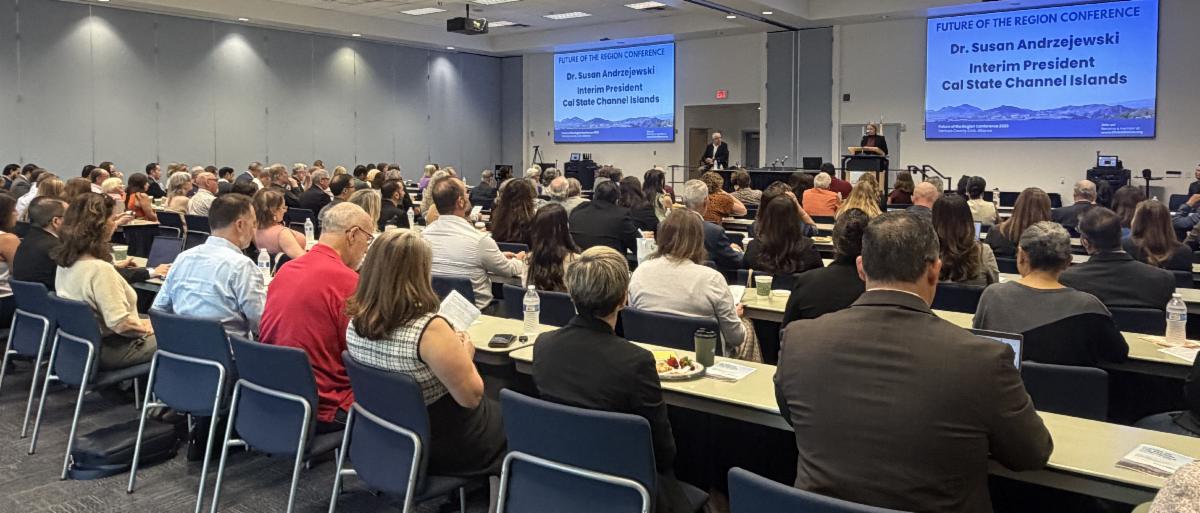
On September 14, we welcomed business, government, education, nonprofit, and community leaders to our 2026 Future of the Region Conference at the Ventura County Office of Education Conference Center in Camarillo.

The conference focused on a question that affects everyone who lives and works in Ventura County: As our population ages and our demographics change, how will we meet the needs of our community in the years ahead?

Ventura County is experiencing significant demographic shifts, including declining birth rates, an aging population, and challenges attracting and retaining younger residents. These changes have implications for nearly every part of our community, from healthcare and housing to education, workforce availability, and our local economy.

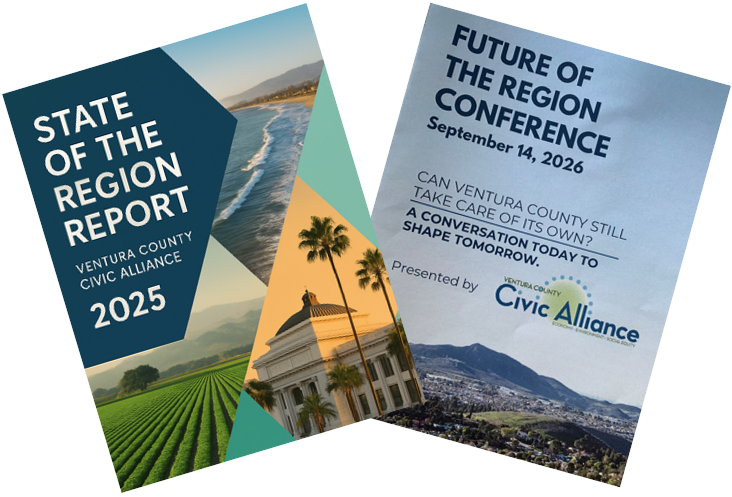
We also shared updated population statistics at the conference as a supplement to our 2025 State of the Region Report. The data showed that Ventura County’s population under age 18 declined by nearly 10% between 2017 and 2024, from 202,341 to 182,707. During that same period, the county’s median age rose from 37.5 to 39.6 years. These trends highlight the importance of planning for our community’s changing needs.

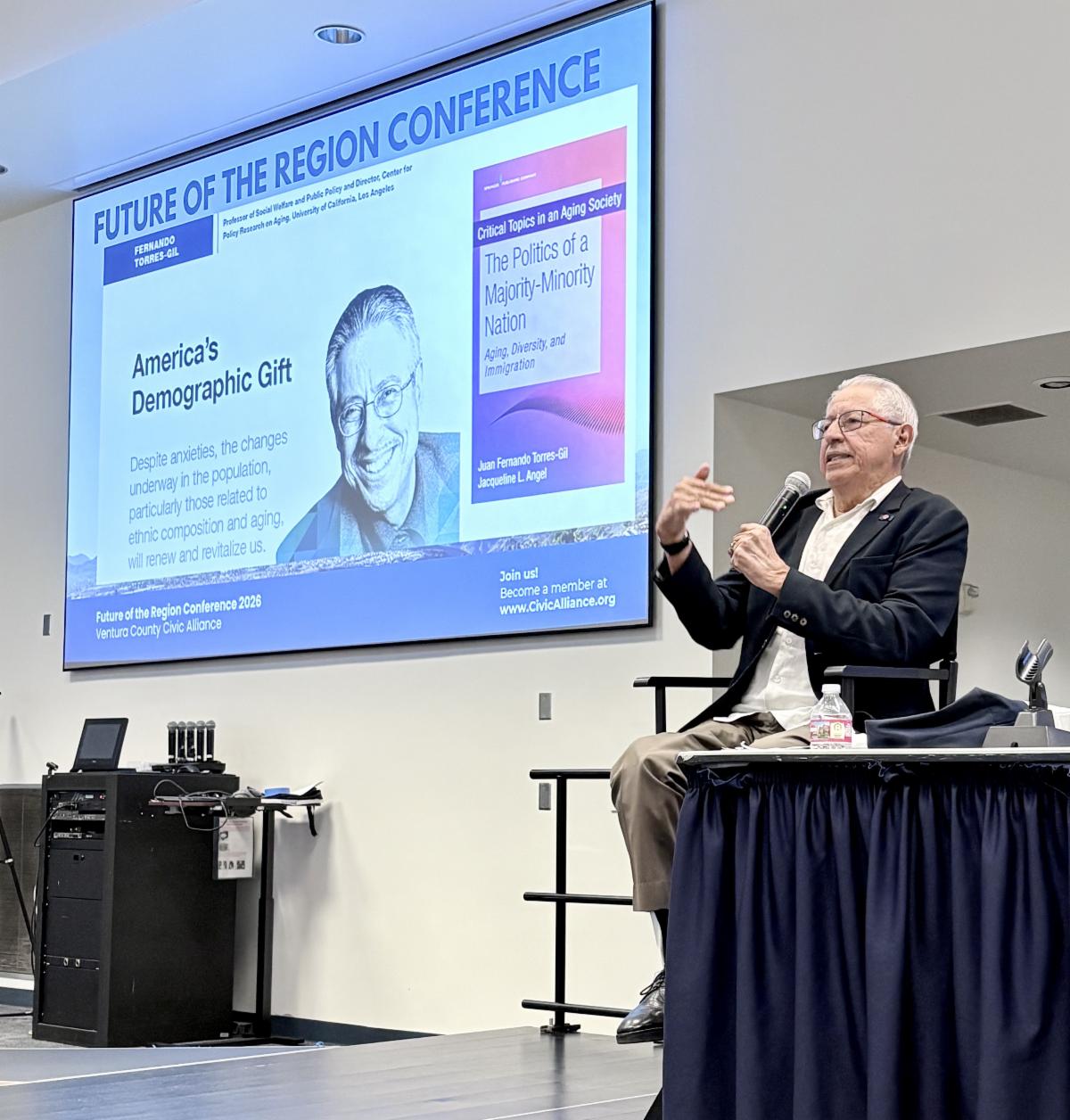
Our keynote speaker, Dr. Fernando Torres-Gil, a nationally recognized expert on aging and public policy, provided a broad overview on these changes and the challenges communities across the country are facing.

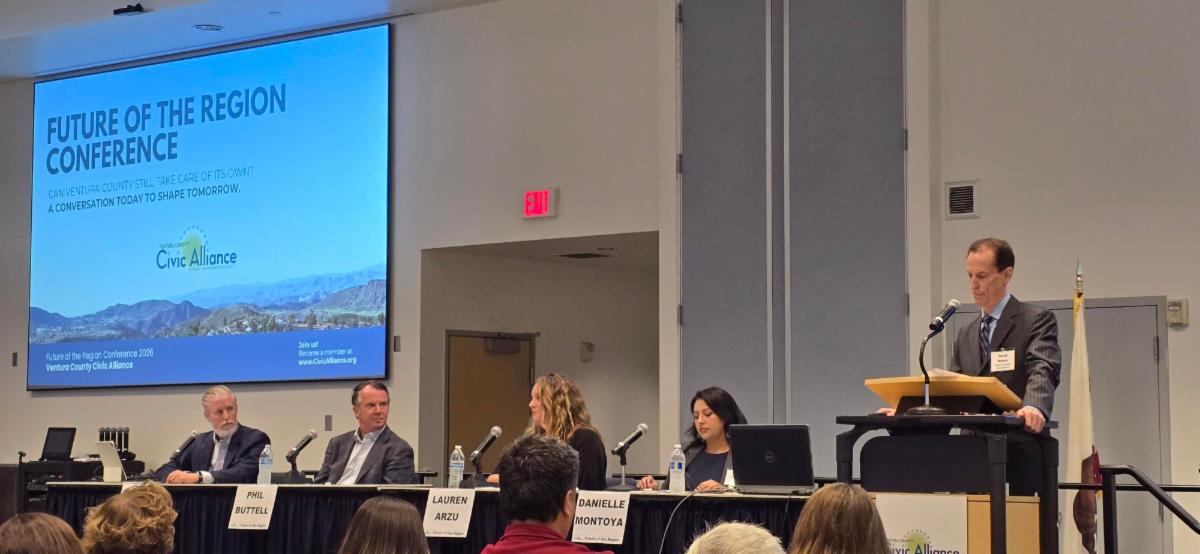
A panel of leaders continued the conversation, sharing perspectives on how demographic trends are affecting Ventura County. Panelists included Phil Buttell, CEO of Los Robles Health System; Drew Powers, City Manager of Thousand Oaks; Lauren Arzu, Executive Director of First 5 Ventura County; and Dr. Danielle Montoya, from Virginia Commonwealth University’s Office of Medicaid Evaluation. They offered the perspective of younger professionals facing challenges with housing affordability, employment, and raising families in our region.

One of the important takeaways from the conference was how interconnected these issues are. An aging population creates growing demands for healthcare and community services, while fewer young families and workers can affect our schools, employers, and long-term economic vitality. Addressing these challenges will require collaboration across many sectors.

Keynote Speaker:

Fernando Torres-Gil, PhD

How do we care for our county’s growing aging population (35.5% to 44.9%, depend-ing on the city) with longer life expectancy while creating and maintaining a robust economy and avoiding stagnation?

The questions we need to ask ourselves:

What do we want to be?

What would we settle for?

Is there a choice?

As an example, Dr. Torres-Gil described how Marin County’s path of exclusion and selective welcome starting 30 to 50 years ago led to a generational ghetto. That attitude, along with Proposition 13 and low interest rates gave little incentive for older folks to leave their homes. Lack of home availability left the area without a workforce to support the aging population and without a social safety net.  Most seniors worry about how to stay in their home, who will take care of them, and how they will they afford it.  To avoid this we need to assess our options and choose a path.

Three scenarios lead to varied end points:

1.  Stay in the Bubble

Staying as we are leads to decline in tax base and work force, and the resulting problems seen in Marin County

2.   Innovative

A population with a variety of ages and incomes provides a bigger tax base and a workforce that can provide care for the aging population.

  • We need to attract outsiders and minorities.
  • Begin to address the issues by creating a master plan based on best practices from others.
  • Prioritize housing for young families, low and middle income families, and large families.
  • Avoid age segregation (enclaves of older adults); build intergenerational and interethnic communities.
  • Support young families with affordable day care, and provide adult day care for seniors.

3.   Over the Horizon

  • Plan for 20 to 30 years out
  • “Gerontologize” the culture with a “Life Spent” perspective

Purposeful aging

Aging in place with supportive neighborhoods

Mainstream aging; reframe it as a positive

  • Educate seniors for financial literacy

Our county is not alone in the issues facing us now, and we should not count on the federal government. However, on the positive side, Dr. Torres-Gil notes that we have built a robust civic culture of engagement and we are a model for aging services.

Panel Discussion

From Dr. Torres-Gil’s perspective, we need to reach outside to attract people to develop an intergenerational, multi-ethnic, economically balanced community. In addressing this, our panel brought a wealth of knowledge and experience in the fields of child care, education, medical services and support systems, and community management.  All of these are intrinsically tied to areas of importance in the creation and sustaining of a diverse and livable community in the long term.

Some takeaways:

  • To attract the young families, besides job opportunities and affordable housing, we need to create a supportive environment, while meeting the growing need for services for our aging population.
  • Childcare is a critical element. When children thrive, the whole community thrives. Even if available, childcare can cost as much as the entire paycheck of one parent. Given that 90% of brain development occurs in the first five years of life, childcare and early education are critical.
  • We need to invest in workforce training for young people who are not on the traditional education path. Currently, there is a disconnect in getting this information to those who need it.
  • Accessible and affordable health care are critical for all age groups. The current purging of Medicare and Medicaid is leaving millions without coverage, placing everyone’s health at risk. We need to think holistically and provide equitable support.
  • Look to public-private partnerships. Learn from organizations already into researching/solving these issues like AARP, the Federal Agency on Aging, Urban Planning and Gerontology programs at UCLA, PACE for senior in-home services, and CalAim for whole person care.
  • Grow our health care work force by offering tuition reimbursement in those fields.
  • Employers should ask what policies would support young families. Consider:

Flexible schedule/work from home

Maternity/paternity leave

Support to come back to work after 3-5 years away

Sick leave/vacation time

Opportunities around location

On-site childcare or subsidy

  • Social and cultural opportunities are important to both the young people and the older residents.

We are at an inflection point where the past collides with our future needs. We cannot afford inaction.

Attendee feedback reflected the value of the discussion, with 84% of survey respondents rating the conference Excellent or Very Good.When asked which topics they would like us to explore further, housing affordability, workforce and talent, and economic opportunity were among the most frequently selected.
Through our Future of the Region Conference and State of the Region Report, we remain committed to providing trusted regional information and bringing people together for meaningful conversations about our community.

The conversation doesn’t end with the conference. We encourage residents, businesses, public agencies, educators, and community organizations to continue exploring the data and considering how we can work together to build a healthy and sustainable future for Ventura County.

View the conference presentation slides and event recap at CivicAlliance.org.

Statewide information can be found in the California Master Plan for Aging: https://mpa.aging.ca.gov/

Thank You to Our Conference Sponsors

We extend a special thank you to our conference sponsors, California State University Channel Islands (CSUCI), Prospera Succession Partners and Maron Software, whose generous support helped make this important community conversation possible.

We also thank our keynote speaker, panelists, community partners, and everyone who attended.

Link to the Full State of the Region Report

Thank you to our

State of the Region sponsors:

RESEARCH SPONSOR

TITLE SPONSOR

DOMAIN SPONSORS

SUPPORTING SPONSORS

CONTRIBUTING SPONSORS

Montecito Bank

Prospera Succession Partners

The Colleges of Law

Bill & Elise Kearney

FRIEND SPONSORS

Dyer Sheehan Group, Inc.

Maron Software

United Way

Kate McLean and Hon. Steve Stone

Stacy and Kerry Roscoe