
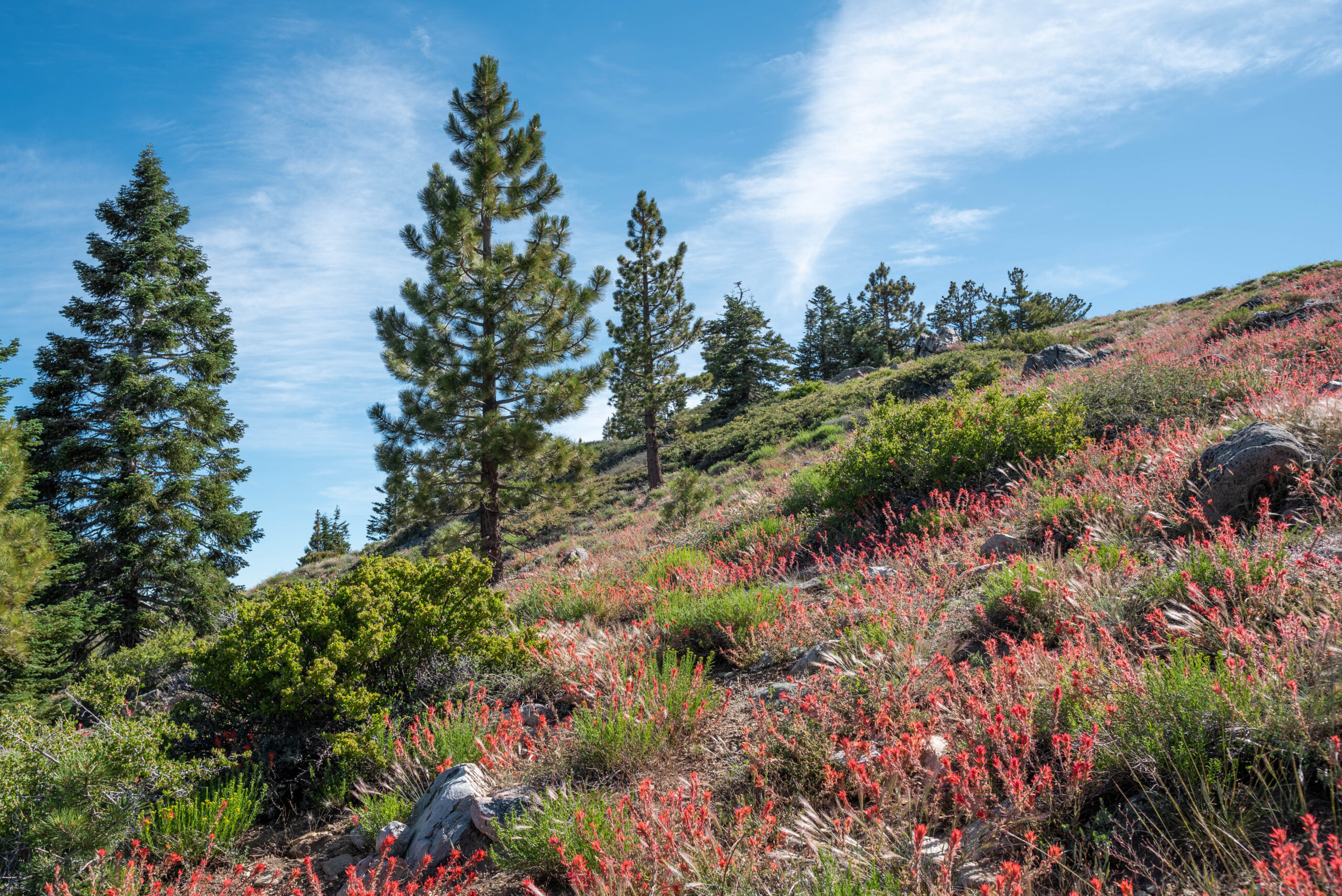
Photo courtesy of Los Padres ForestWatch.
Community groups identify opportunities for further improvement
CENTRAL COAST — The U.S. Forest Service has announced its approval of the Los Padres National Forest Wildfire Risk Reduction Project, a controversial large-scale vegetation-clearing proposal, reduced from an original 235,493 acres to approximately 33,023 acres.
The Forest Service signaled its intention to begin work immediately. Conservation groups welcomed the substantial reduction and the agency’s responsiveness to public and stakeholder input, while emphasizing that additional safeguards are needed to better protect the environment and prioritize clearing closer to communities where it will provide the greatest benefit.
“The Forest Service made real changes in response to environmental concerns and public input, and the project is far more focused than when this process began,” said Los Padres ForestWatch Director of Advocacy and Field Operations Benjamin Pitterle. “While we appreciate those improvements, this remains a large and complex project, and there are still important areas where further refinement is needed.”
Much of Los Padres National Forest consists of chaparral and other native shrublands that generally do not suffer from the fire deficit found in some western forests. These landscapes are increasingly threatened by overly-frequent fire. Repeated clearing an disturbance can damage wildlife habitat, spread invasive grasses, and convert native vegetation to flammable weeds.
Community Concerns Prompt Changes
A coalition of 91 community organizations urged the agency to focus vegetation removal where it provides a clear public-safety benefit, including areas closer to communities, roads, evacuation routes, infrastructure, recreation sites, and previously disturbed areas. The organizations have opposed unnecessary clearing in remote and sensitive habitats where the benefits to nearby communities may be limited.
The vegetation clearing project was initially announced in 2022 and spanned more than 235,000 acres. Last year, the Forest Service reduced the project to 90,796 acres and published a Draft Environmental Assessment. The coalition of environmental, tribal, community, scientific, and outdoor organizations maintained that the project remained too expansive, and—alongside ten local, state, and federal elected officials—endorsed a 15,257-acre Community Alternative. The coalition urged the agency to further reduce impacts to roadless areas, critical habitat, cultural resources, recreation sites, and other sensitive landscapes. More than 600 public comments were submitted during the review period in support of the Community Alternative.
Today’s decision reduces the project by nearly two-thirds from its previous version and by more than 85% from the original proposal. The agency said its refinements responded to public concerns about the project’s scale, treatment locations, and potential impacts to sensitive species and habitats.
Among other changes, the Forest Service removed larger tree removal areas near the coast and concentrated work along existing roads, trails, developed sites, and previously disturbed areas. These changes bring the project closer to several of the central principles identified in the Community Alternative, though the agency did not adopt that alternative in full.
The revised project reduced work in roadless areas, critical habitat, and other sensitive landscapes but does not eliminate those overlaps entirely. It also establishes species- specific tree-diameter limits for some sensitive tree species based on technical recommendations from ForestWatch and botanical experts but does not provide comparable protections to other key species with unique ecological requirements that could be harmed by a one-size-fits-all approach.
Concerns Remain, Public Input Limited
The groups remain concerned about proposed work in inventoried roadless areas, designated critical habitat, and other sensitive ecological and cultural landscapes. The organizations will also closely review how the Forest Service addresses vegetation removal, heavy equipment use, the spread of invasive plants, and other site-specific impacts during implementation.
The Forest Service is advancing the project under an emergency designation tied to Trump administration directives that bypasses the usual formal objection period, eliminating an important, structured opportunity for the public to raise and resolve outstanding concerns before the agency issues its decision.
“We’ve made real progress on this project, which makes it all the more frustrating to see the public process cut short in the name of a logging emergency,” Pitterle said. “An objection period would have given us a chance to work through the remaining concerns before crews get to work. We want this project to make communities safer, and we’ll keep working with the Forest Service to focus efforts where the science shows they’ll do the most good, while protecting the places that remain at risk.”
Regional Conservation Partners Voice Support
“Native chaparral vegetation communities need protection, not added disturbance. Old growth chaparral, which historically was habitat for California grizzlies, do not benefit from prescribed fire, logging, or other treatments. Instead, fire concerns should be addressed by local community home hardening, while leaving wildlands wild.” —Laura Cunningham, Western Watersheds Project
“Our communities worked together to make the Wildfire Reduction Project a far better program. Shrinking this project by more than 85 percent from the original proposal is a real win for the Los Padres and the people who love it. Now the Forest Service needs to finish the job and respect the wishes of our neighbors to keep crews out of our roadless areas and critical habitat. We want to see them putting every dollar where it actually protects our communities and our forests.” —Maureen Ellenberger, Chair, Sierra Club Santa Barbara–Ventura Chapter
About Los Padres ForestWatch
Los Padres ForestWatch is a 501(c)(3) nonprofit organization that protects wildlife, water, wilderness, and sustainable access throughout Los Padres National Forest and Carrizo Plain National Monument through advocacy, education, and community engagement. Follow ForestWatch on Instagram, Facebook, LinkedIn, and Bluesky. Learn more at forestwatch.org