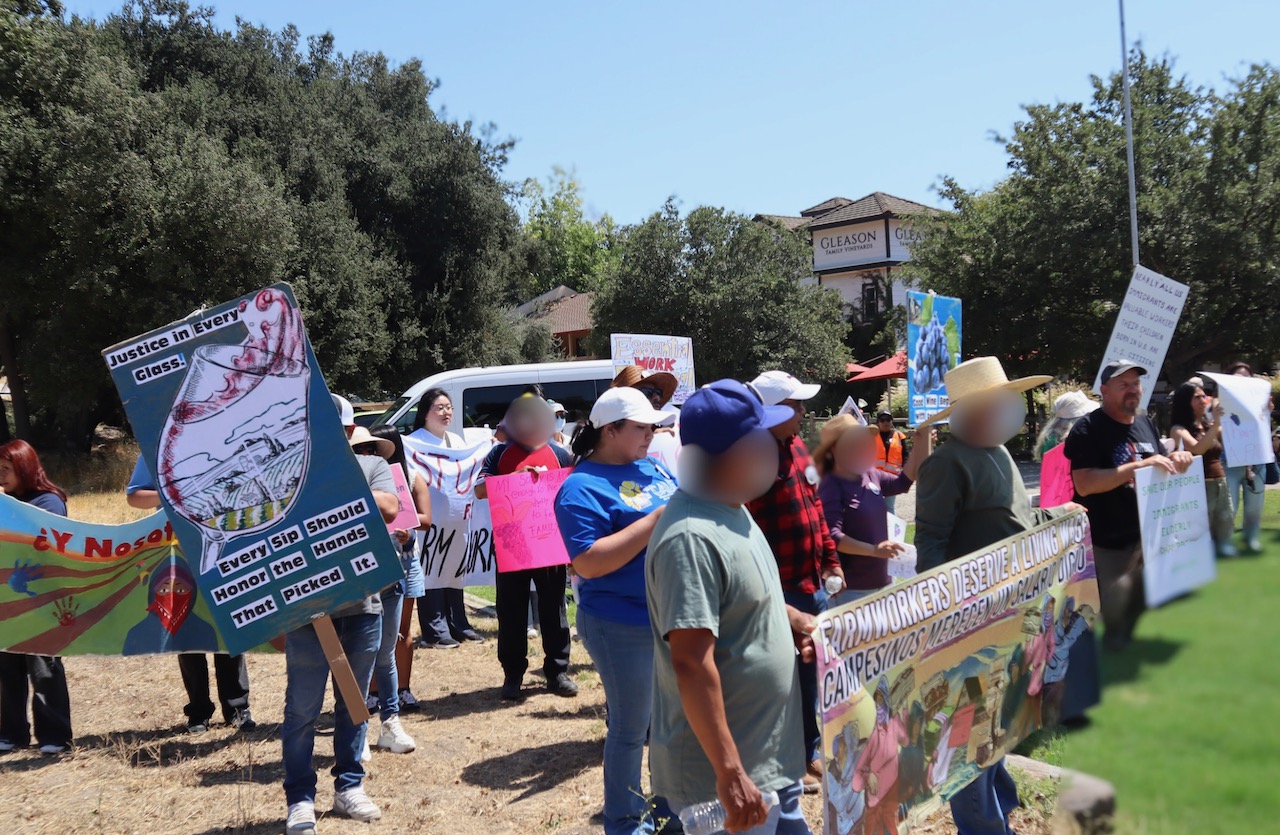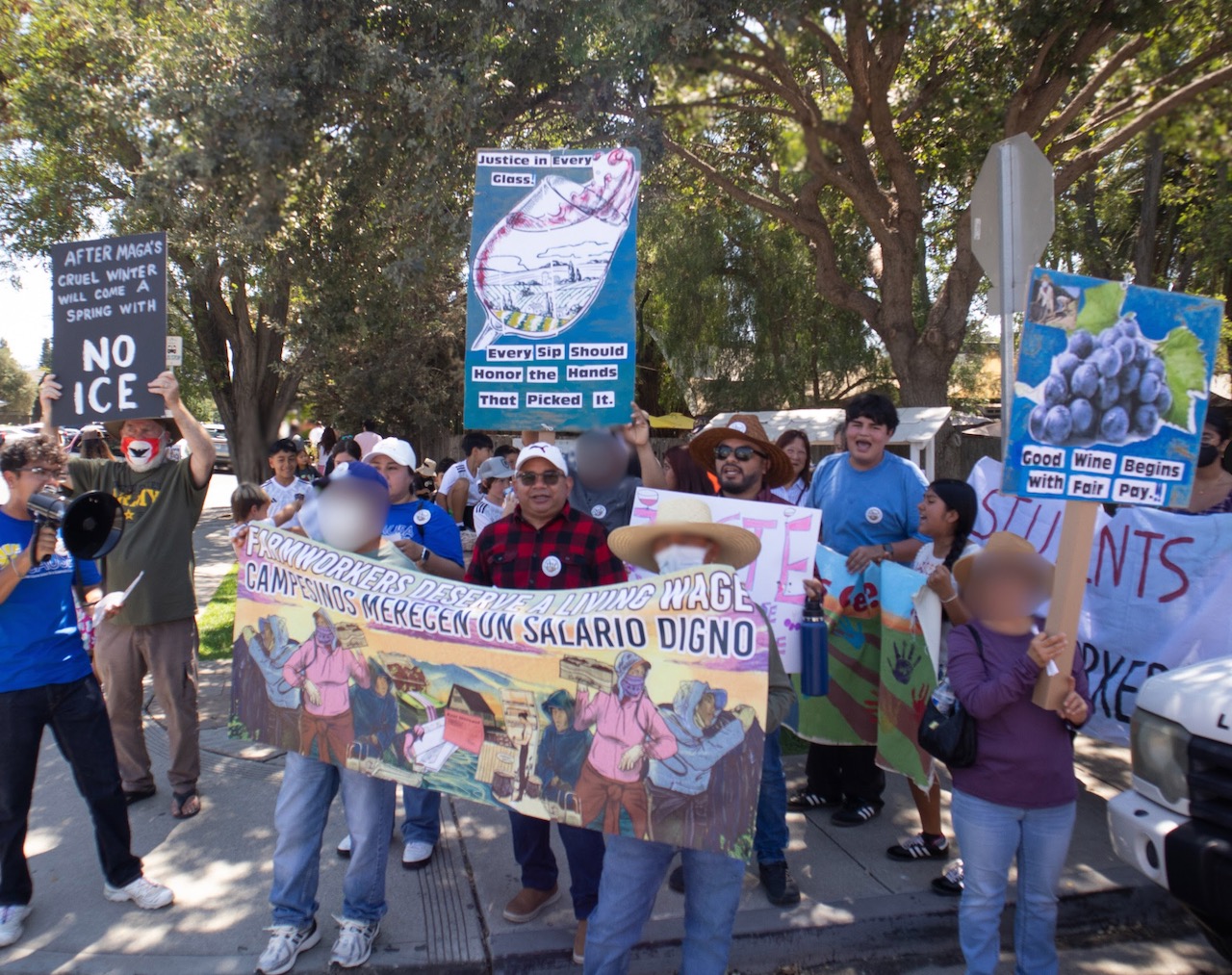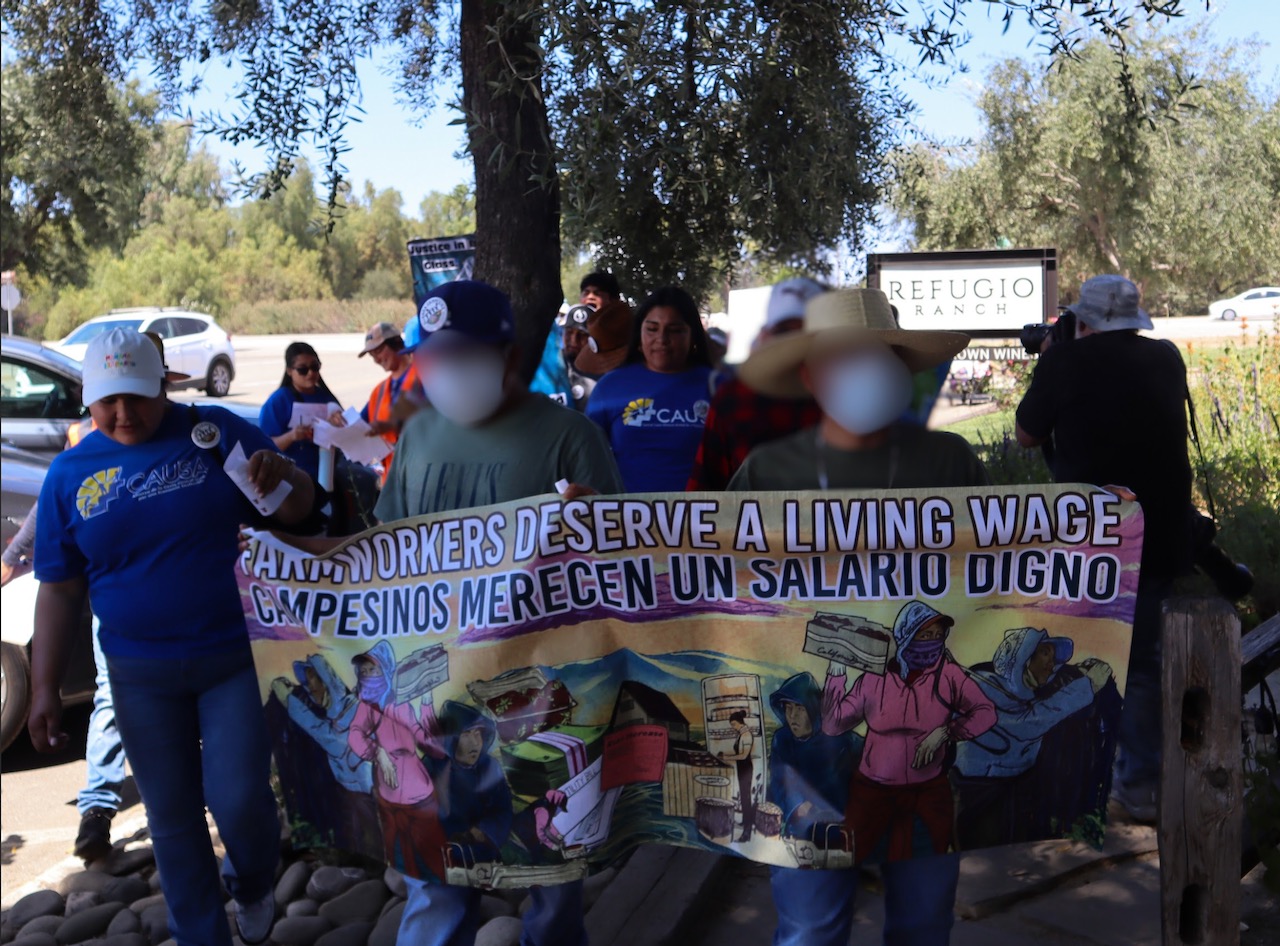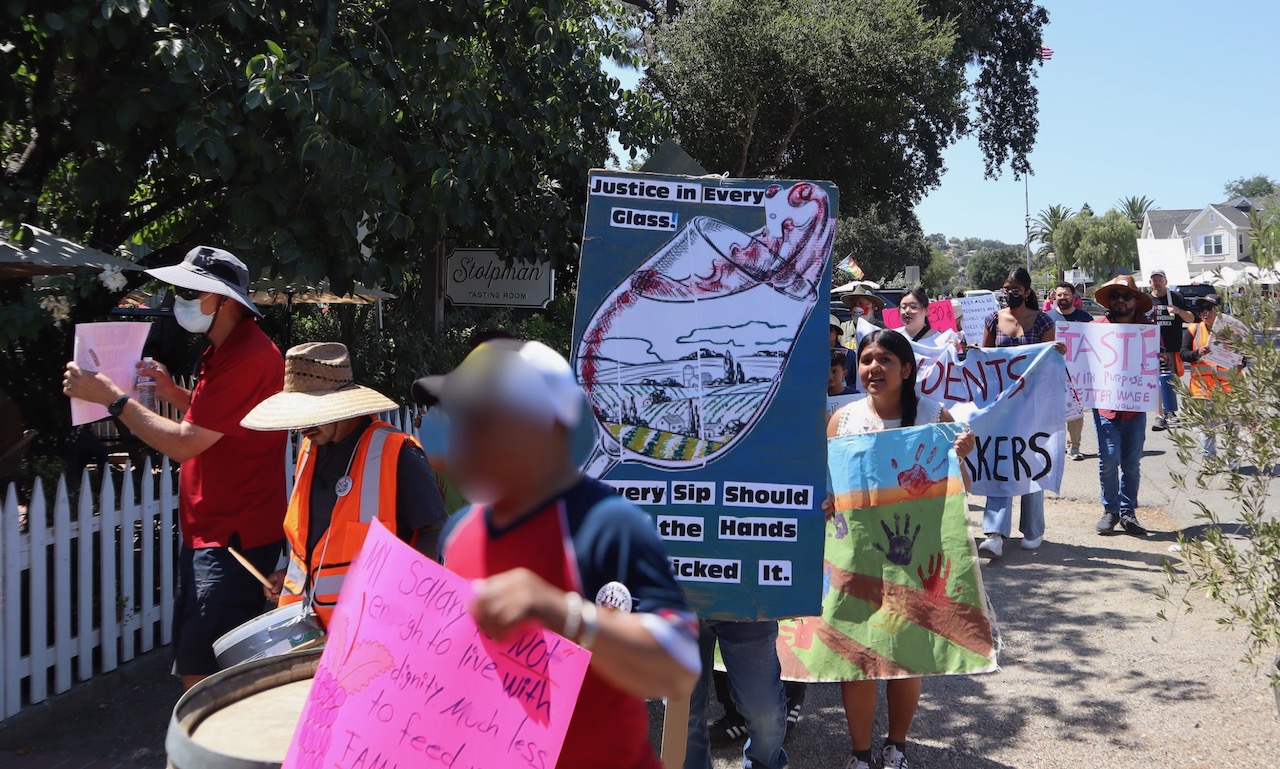
Photos courtesy Alianza Campesina.
Courtesy Alianza Campesina, MICOP and CAUSE
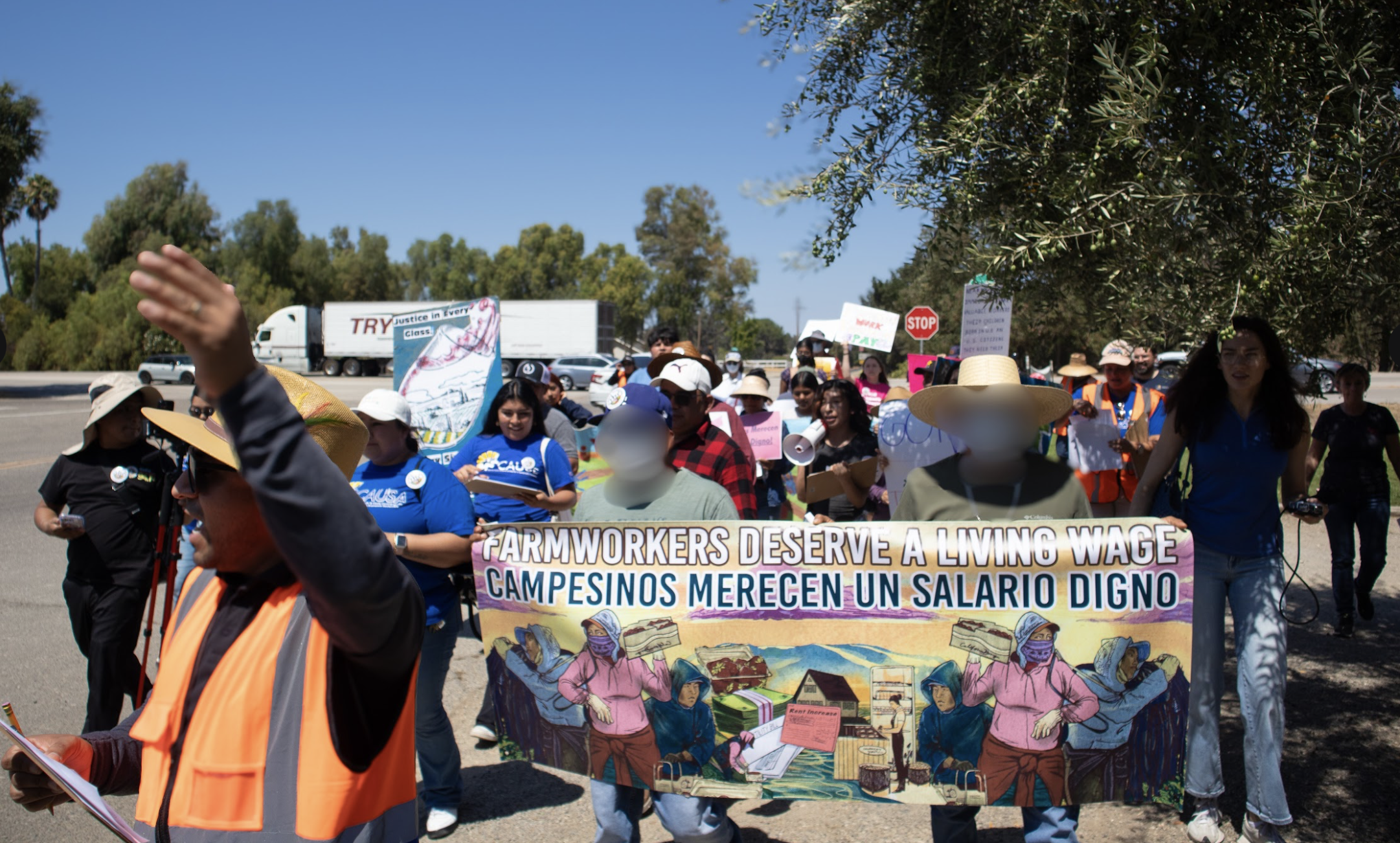
LOS OLIVOS — As the nation celebrated Labor Day, farmworkers in Santa Barbara County remindED the public that the fight for workers’ rights and dignity is far from over. On Saturday, August 30, 2025, just ahead of Labor Day, farmworkers and community supporters marched through Los Olivos to demand living wages and safe working conditions in the region’s world-famous wine industry. On a busy weekend for tasting rooms in Santa Ynez Valley wine country, community members marched to remind the public of the labor behind the expensive bottles of wine they enjoy on their days off.
“It is truly amazing to see our community from all over Santa Barbara County standing with us today just as they did last November when we demanded a living wage from the board of supervisors,” said Fernando Martinez, Santa Maria Organizing Manager at MICOP. “They may have ignored us then and growers may have believed they won, but we have not gone anywhere. We will keep fighting and now more than ever, we need every voice to rise with ours until farmworkers receive the dignified wage they deserve.”
While county supervisors recently voted to raise their own salaries, declaring that hard work deserves higher pay, farmworkers say the same principle must apply to those whose labor powers the local economy. The board also recently approved a 1% levy on local wine sales to promote and market the region’s wine industry. Alianza Campesina calculates that farmworkers harvesting wine grapes could be paid a living wage at a similar cost to the consumer. In luxurious Santa Ynez Valley vineyards, tourists sip wines often priced at $30-50 per bottle, while farmworkers who pick the grapes earn pennies for each bottle sold.
“Heavy lobbying from the powerful Santa Barbara County wine industry has been the biggest obstacle to the Board of Supervisors passing a living wage for farmworkers. We’re here to shine a light on the complete disregard for the essential workers who keep these corporations running,” said Daniel Segura, Associate Organizing Director of CAUSE.
Last November, the Santa Barbara County Supervisors held a public hearing on working conditions and wages in the agriculture industry, where they ultimately declined to move forward on a $26 per hour living wage ordinance proposed by hundreds of farmworkers in attendance. At the hearing, agribusiness groups vehemently opposed the proposal. A representative from Crowne Point Vineyards claimed the wine industry could not afford higher wages, despite selling bottles from $75-175 according to the company’s website. Alianza Campesina estimates that grape harvesters are paid 20-30 cents per bottle sold.
The Alianza Campesina Winery March, organized by Alianza Campesina in partnership with CAUSE (Central Coast Alliance United for a Sustainable Economy) and MICOP (Mixteco/Indígena Community Organizing Project), brought together farmworkers, community leaders, and supporters to highlight the deep injustices in Santa Barbara County’s agriculture industry.
“This Labor Day, we’re demanding more than recognition – we’re demanding justice,” said Erasto, Alianza Campesina Farmworker Delegate and leader of MICOP. “Our labor fuels this county’s economy, but too many of us still struggle to make ends meet. Dignity and living wage can’t wait.”
Despite generating $70 million in the last year, the wine industry relies on low wages, unsafe conditions, and immigrant labor made vulnerable by the constant threat of ICE disappearing community members and tearing apart families. Advocates say this exploitation stands in stark contrast to the holiday meant to honor working people.
“Labor Day was created to celebrate workers’ struggles and victories,” said Celina Ramirez, Santa Maria Organizer of CAUSE. “But here in Santa Barbara County, farmworkers are still denied the most basic dignity: a living wage. That’s why we march.”
Alianza Campesina de la Costa Central (Alianza Campesina) is a partnership between CAUSE and MICOP that empowers farmworkers across California’s Central Coast to organize for their rights and fight for dignified working conditions.