On the vast savannahs of East Africa, the Maasai warriors begin each encounter with a greeting that reveals the soul of their civilization: “Kasserian Ingera?” they ask. “And how are the children?”
This isn’t small talk. It’s existential inquiry.
The traditional response—”All the children are well”—carries the weight of their societal health. When all the children are well, life is good. The strength of the tribe, its future and its present moral standing, all converge in this simple exchange.
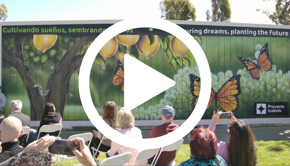
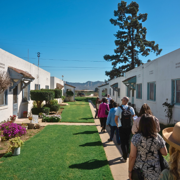
I was thinking about this greeting while driving through the streets of Santa Paula for our Isabella Project mural unveiling and steering committee meeting. As a mid-sized agricultural town in Ventura County, nothing could seem farther from the Maasai plains than this collection of tract homes, strip malls and citrus groves nestled in a valley 90 minutes north of Los Angeles. Yet I feel something remarkable here: a community that unconsciously carries the Maasai wisdom in its heart.
America in 2025 has fallen into a polarization trap. We’ve sorted ourselves into epistemic tribes, each convinced the other side threatens civilization. Our social trust metrics have cratered. We’ve become communities defined by what we hate rather than what we love. The social fabric, as political scientist Robert Putnam observed decades ago, continues its steady unraveling.
But Santa Paula suggests another pattern.
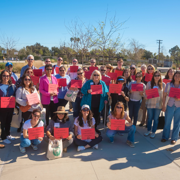
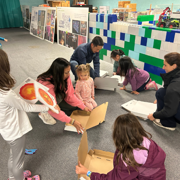
At our last Isabella Project gathering, I sat in a community center watching residents from across every conceivable demographic divide—white businessman, Latino mural artist, elected official who splits their time between home and Sacramento, teacher, ballet folklorico dancer and business owner—all gathered around a shared vision called the Isabella Project.
The Isabella Project isn’t just another well-intentioned community initiative. It represents something deeper. It is guided by a comprehensive roadmap that addresses children’s needs by reimagining everything around them—housing, education, transportation, labor policies. It’s gloriously ambitious, occasionally unwieldy and entirely essential.
What struck me wasn’t the project’s scope, but the shared moral language permeating the room. Despite our differences, we had found something powerful—a common concern for our children’s future that transcended our various tribes.
I came to work at the Ventura County Community Foundation partly because I sensed this communal wisdom. There’s something beautiful about watching a community embrace tribal wisdom in modern form. When societies fragment, we typically look for sophisticated policy solutions or structural reforms. But perhaps what we need is something more ancient—the recognition that our collective well-being is measured best by how our children fare.
When the Maasai answer that all their children are well, they’re expressing both reality and aspiration. In Santa Paula’s embrace of the Isabella Project, I see us doing the same—describing not just the community they have, but the one they seek to build. And in that aspiration might lie wisdom for us all.
If you would like to learn more about the Isabella Project, we encourage you to visit vccf.org/isabella-project. There are so many ways you can help.
Sincerely,
Roshin Mathew
Director of Strategic Initiatives