|
Volume 20 / Number 76 / November 2025
|
|
Your Livable Communities Newsletter
|
|
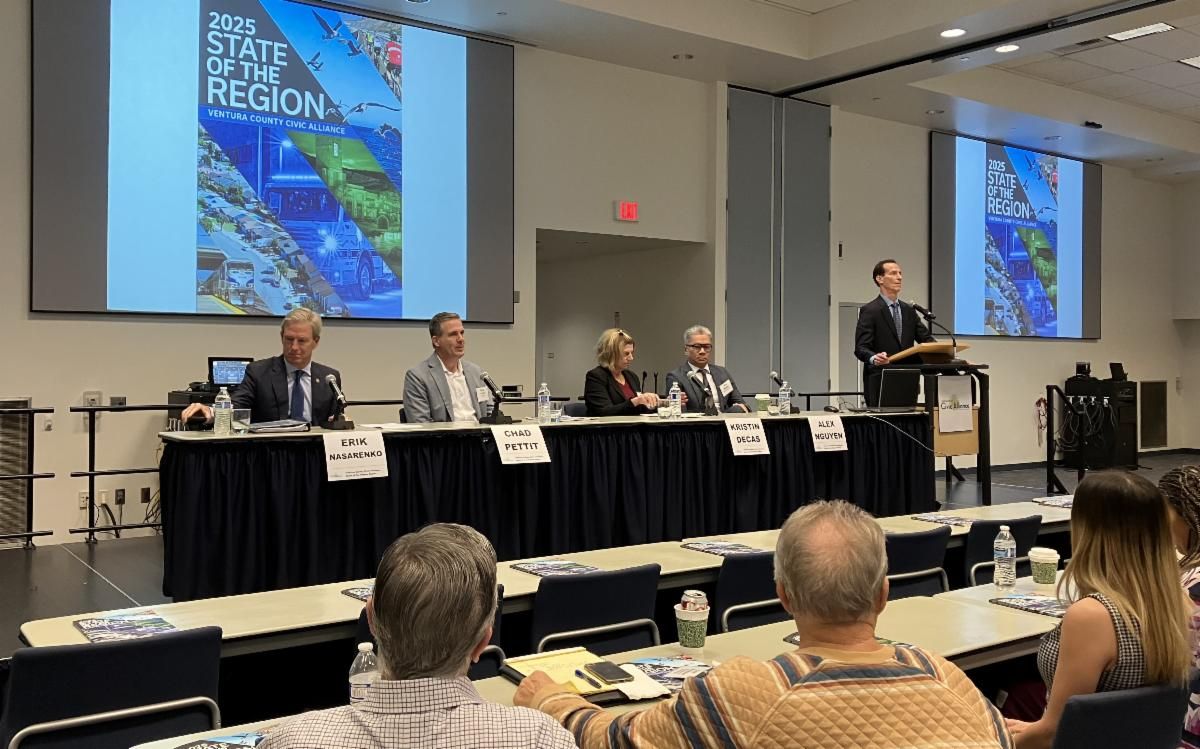
| This year’s State of the Region event was an overview of the report by Tony Basotti, and panel with District Attorney Erik Nasarenko, Amgen Executive Director of Global Government Affairs Chad Petit, Port District CEO & Director Kristin Decas, and Oxnard City Manager Alex Nguyen, who gave their perspectives on issues in the report.
This venture is crucial to the dissemination of information to the community and leaders in business, education, and government, who are instrumental in planning the county’s future. We are grateful to our sponsors whose support is integral to this important project.
As always, let us know what you think.
Stacy Roscoe |
|
|
THE STATE OF THE REGION REPORT – 20025
|
|
| The 2025 edition of the Ventura County Civic Alliance’s State of the Region report published on Nov. 11, with a sold-out launch event at the Ventura County Office of Education in Camarillo. The report is the Civic Alliance’s biggest project. It publishes every two years, and this year’s edition features 120 pages of data and analysis.
The report is organized by different domains, or chapter topics, including agriculture, the economy, education, public health and public safety. Many of these domains deal with overlapping topics and themes, and in this edition of Livable Communities, we present some of the report’s highlights as they pertain to three of those broad themes: housing and affordability; our social safety net; and education, jobs and workforce development |
|
|
HOUSING AND AFFORDABILITY
|
|
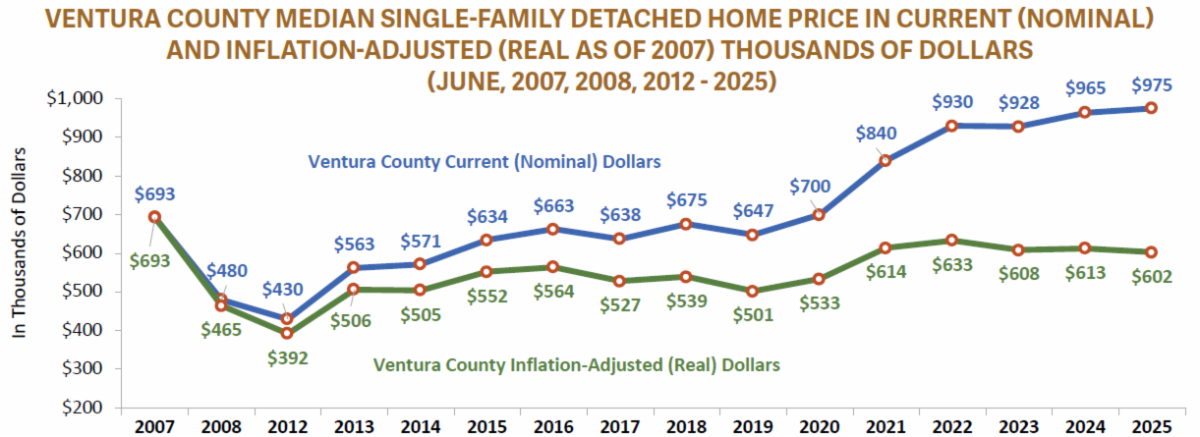
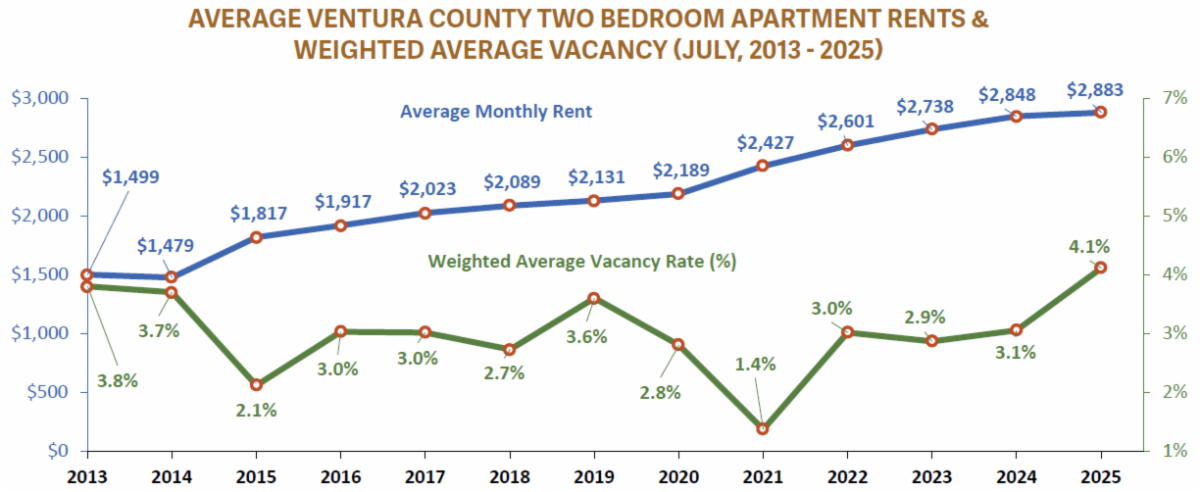
| Ventura County’s high cost of living is a recurring theme throughout years of State of the Region reports. Housing costs are the primary driver of the overall high cost of living. In June of 2025, the median price of existing single-family homes sold in Ventura County was $975,000. Rents, too, are quite high; the average rent for a two-bedroom apartment in July 2025 was $2,883.
Ventura County’s high cost of living is a recurring theme throughout years of State of the Region reports. Housing costs are the primary driver of the overall high cost of living. In June of 2025, the median price of existing single-family homes sold in Ventura County was $975,000. Rents, too, are quite high; the average rent for a two-bedroom apartment in July 2025 was $2,883. |
|
| Though Ventura County is a relatively expensive place to both rent and buy, costs in recent years have flattened and even declined when adjusted for inflation. The median home price, after climbing dramatically from 2019 to 2022, grew only 5% from 2022 to 2025. In inflation-adjusted terms, that represents a decrease of 5% over those three years. |
|
| The average rent for a two-bedroom apartment in Ventura County grew 1.2% from 2024 to 2025. That, too, was slower than the rate of inflation, and it was much smaller than the average rent increases for the previous decade. Between 2014 and 2024, the average rent for a two-bedroom apartment nearly doubled. When adjusted for inflation, the 10-year increase in rent was still 46%. |
|
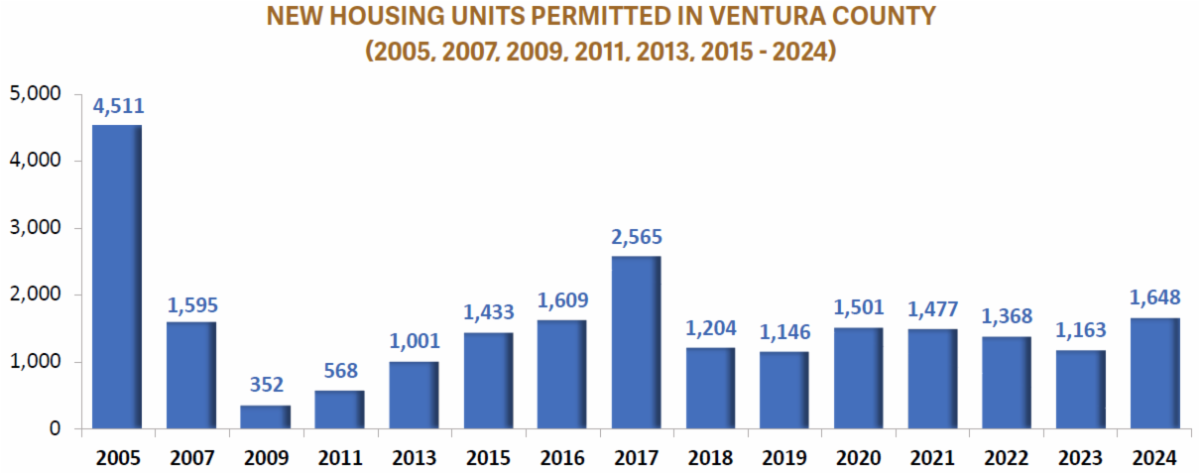
| One likely reason for this long-term increase in housing costs is a paucity of new homes. Ventura County’s “housing starts” — a term for the total number of new homes permitted by local government — have been at historically low levels ever since the bubble of the early 2000s burst. In most years since 2007, there have been fewer than 1,500 new homes permitted in all of Ventura County. In 2024, though, there were 1,648 housing starts, more than in any year since 2017. Thousands more units are either under construction or in their local government’s approval pipeline, which means the county could continue to add housing in the coming years, giving more relief to renters and their bank accounts.
The new construction is not likely to impact the for-sale market much. In recent years, about 70% of new homes built in Ventura County have been apartments or condominiums; 20 years ago, most new homes were single-family houses. |
|
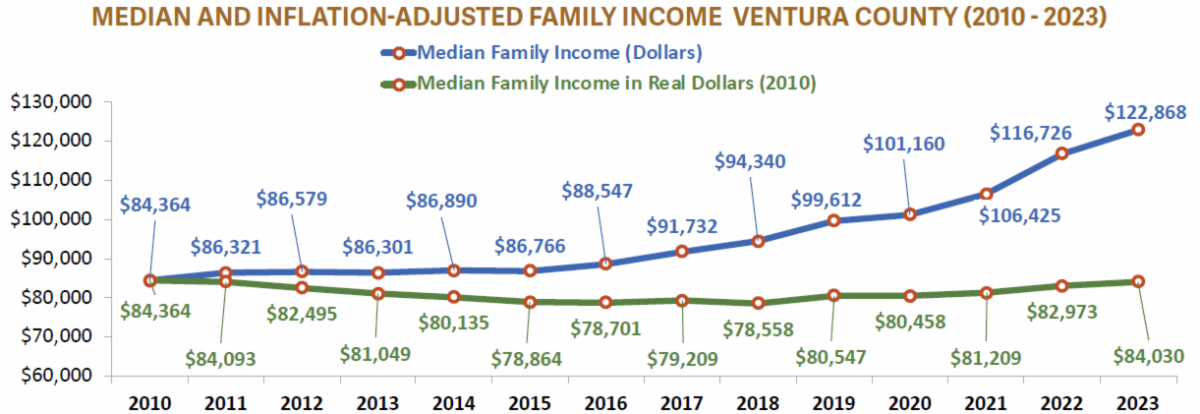
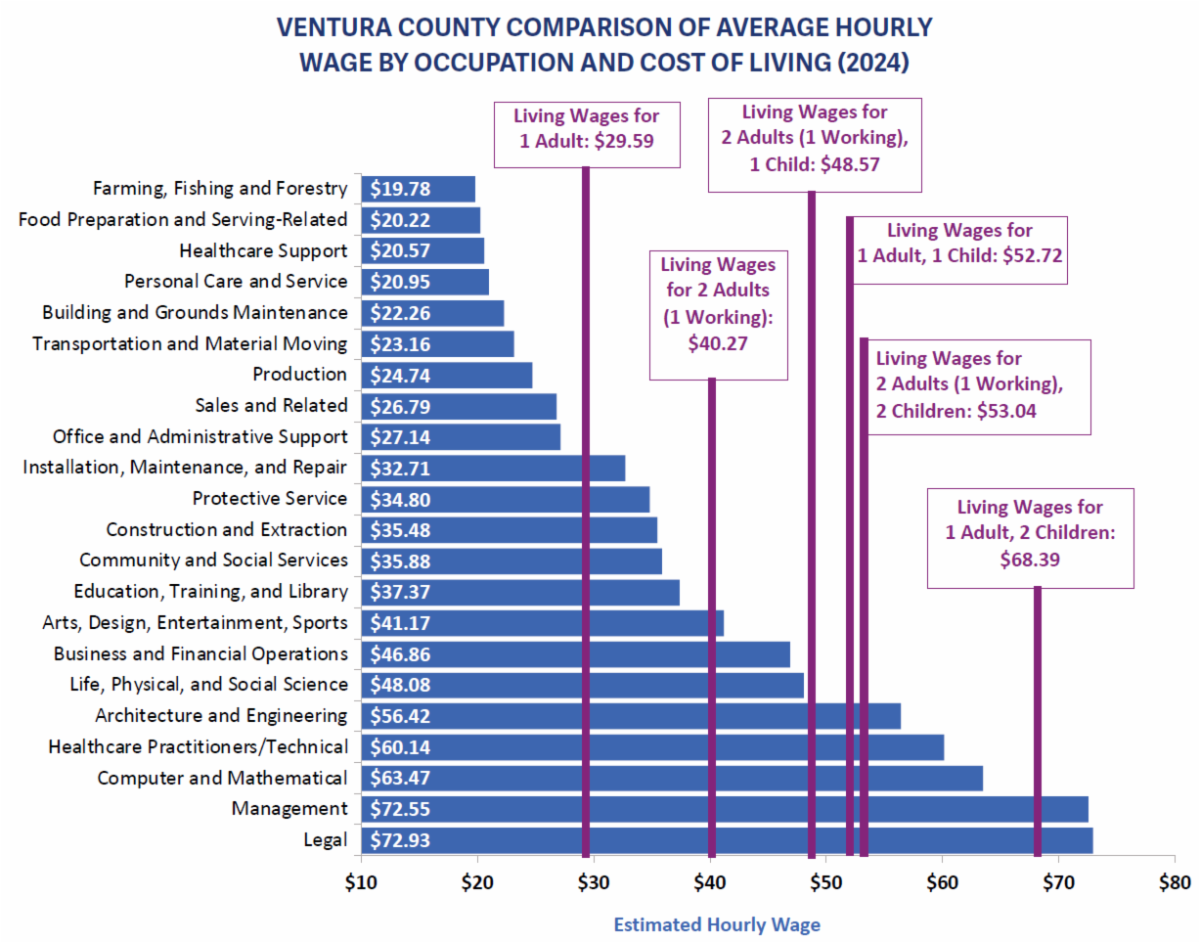
| Ventura County’s median personal and household incomes are relatively high, but they’re not high enough to keep up with our high cost of living. The State of the Region report includes data from the Living Wage Institute on how much a family must earn to afford just the basics in our region. The answer, most of the time, is more than many jobs in the county pay. For example, a single parent with one child needs to earn $52.72 an hour to afford the basics, such as housing, health care, child care, food and transportation. |
|
| The recent federal government shutdown, which was accompanied by a threat to federal food assistance, put a spotlight on the often-precarious nature of our safety net. Even when the government is functioning fully, not everyone in need is covered by federal benefits, and those who are often don’t get as much as they need. |
|
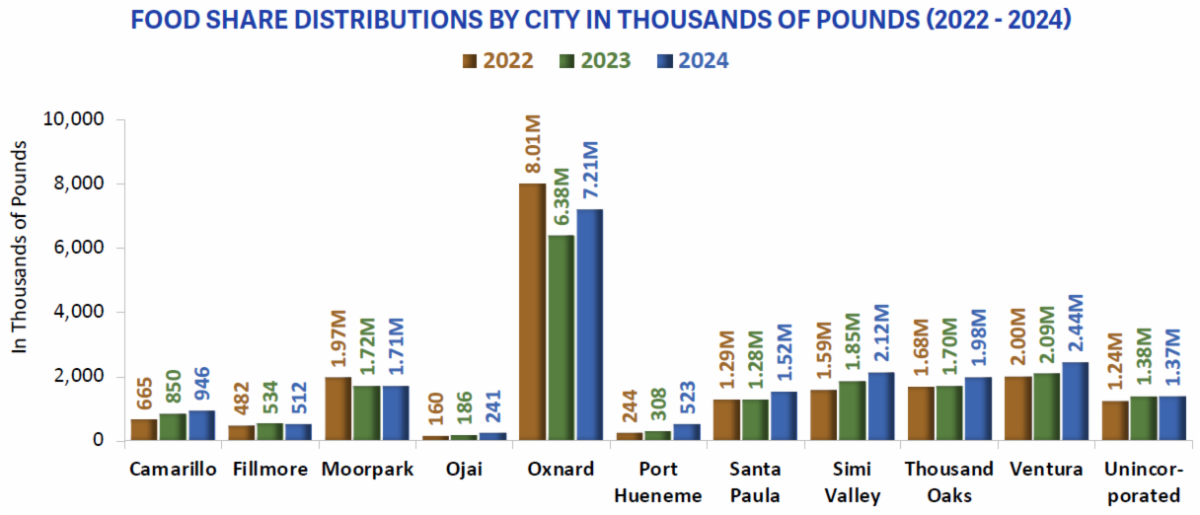
| In Ventura County, the main provider of food to people who don’t have enough is the nonprofit Food Share. Its task has never been bigger. In 2020, when the COVID-19 pandemic began and put thousands of people in Ventura County out of work, Food Share nearly doubled its food distribution from the year before, handing out 25.6 million pounds of food. The level of need has stayed nearly that high ever since. In 2024, Food Share distributed 20.6 million pounds of food, which works out to more than 20 meals for every person living in Ventura County. It was the second highest total in the organization’s history, after 2020. |
|
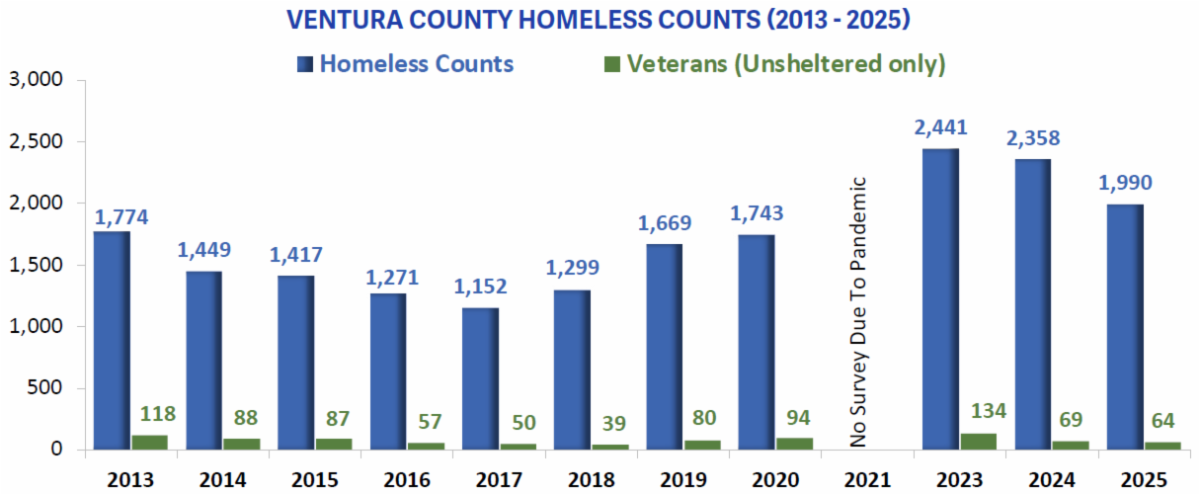
| Perhaps no phenomenon better illustrates the holes on our society’s safety net than homelessness. In 2025, Ventura County’s annual count found 1,990 people in Ventura County classified as homeless, which means they were living in temporary shelters or were without any shelter, such as those sleeping outdoors or in cars. Though that number is quite high — 73% higher than it had been in 2017 — the total number of homeless people counted in that annual census has declined for two straight years, after peaking in 2023. |
|
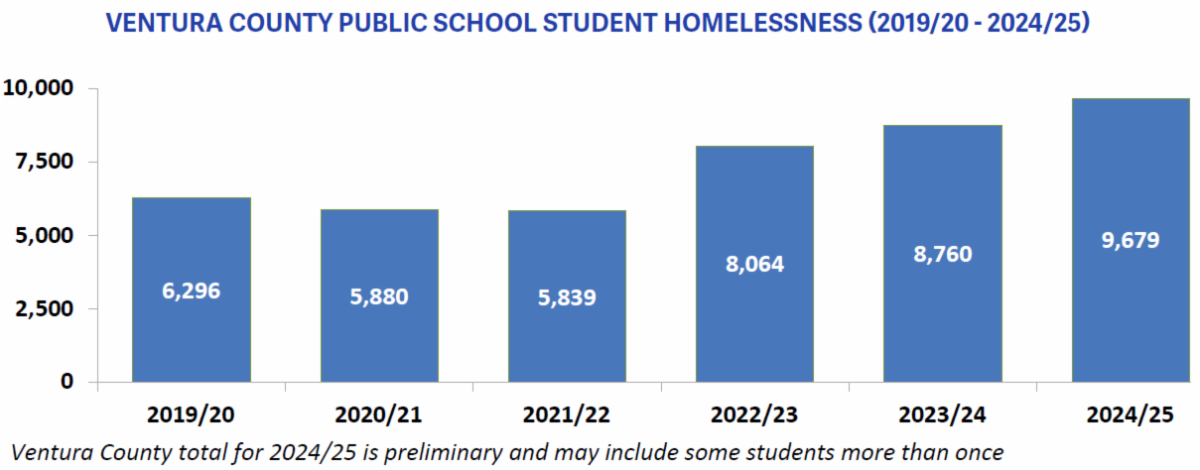
| Perhaps even more distressing than the number of homeless people are the number of children who are in or near homelessness. According to the Ventura County Office of Education, 9,679 public school students in Ventura County had inadequate housing at some point in the 2024/25 school year. The vast majority aren’t actually homeless, but are living in motels or shared housing due to economic necessity. This problem is getting worse: the number of students living in these conditions has gone up for three years in a row, with a total increase of 66% between the 2021/22 and 2024/25 school years. |
|
| Schools and jobs are closely related, because, of course, the students of today are the workforce of tomorrow. The recent record of Ventura County’s public schools is mixed. In some areas, they excel. For example, the county’s high school graduation rate in 2024 was 89.3%, three percentage points above the overall state graduation rate, and the dropout rate was 4.8%, 4 points below the state rate. (The dropout and graduation rates add up to less than 100% because some students finish high school without dropping out but without earning a diploma.) |
|
| In other areas, though, students here are struggling. In most schools, standardized test scores in math and English dropped during the pandemic, and they have generally not recovered. There are also wide gaps in achievement between schools and between students within schools. Students with lower household incomes are not performing as well as students from better-off households, and Latino and Black students also score lower than their white and Asian peers. |
|
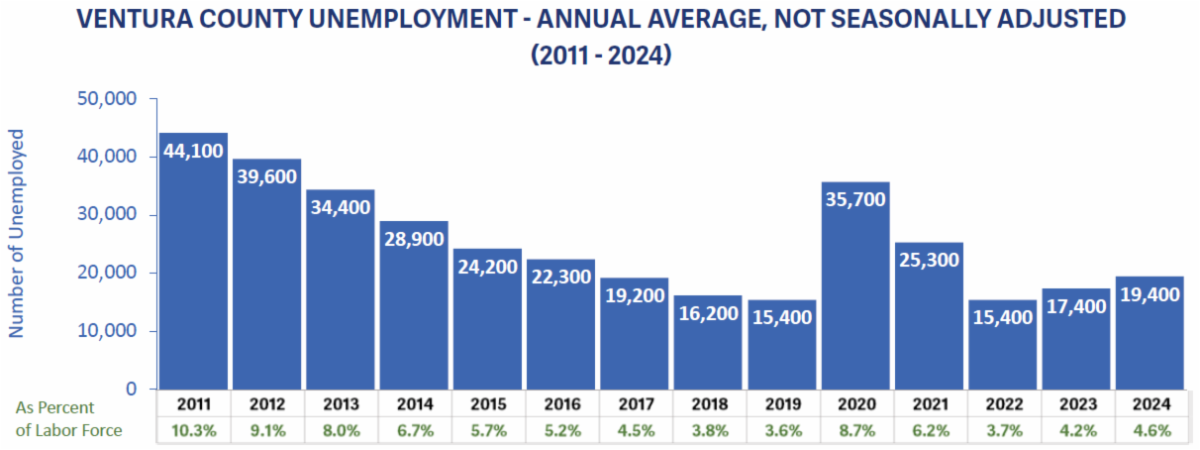
| When young people finish school, they are entering a job market in Ventura County with some clear strengths and weaknesses. Our unemployment rate remains fairly low, at an average monthly rate of 4.6% throughout 2024. But it is growing, and as higher in 2024 than in either of the previous two years. |
|
| The biggest problem in our job market is that our county is not generating a lot of jobs that pay well enough to live here comfortably and raise a family. Among jobs that don’t require a four-year college degree, the construction and manufacturing industries both offer outstanding economic opportunity, with wages well above the county average. But the size of the workforces in both of those sectors were stagnant between 2019 and 2024. Meanwhile, the leisure and hospitality sector and the education and health services sector, both of which pay less than construction or manufacturing, have been growing in recent years. |
|
|
Thank you to our
State of the Region sponsors:
RESEARCH SPONSOR
|
|
|
Montecito Bank
Prospera Succession Partners
The Colleges of Law
Bill & Elise Kearney
|
|
|
Dyer Sheehan Group, Inc.
Maron Software
United Way
Kate McLean and Hon. Steve Stone
Stacy and Kerry Roscoe
|
|
|
|
|