|
Volume 20 / Number 15 / August 2025
|
|
Your Livable Communities Newsletter
|
|
| In previous issues we have examined the needs for housing for varied segments of our community and different approaches to solving them. This issue covers an at an often neglected area: the need for housing for at-risk young adults. 20% of those from the foster system experience homelessness the day they age out, and 50% experience homelessness within 18 months. Close to 60% of California’s community college students are housing insecure.
We highlight two projects in the county that offer different housing arrangements with similar services and goals. There is no one-size-fits-all solution as every youth is different. The investment in housing and support systems for them as they transition to independent, productive living can reduce their need for services later and set them on a path to employment, self-sufficiency and permanent housing. Research has found that a majority of at-risk young adults who are able to participate in transitional housing programs are employed and/or enrolled in school when they leave and they exit to stable housing.
We also want to remind you of the upcoming State of the Region Report, highlighted below. This venture is crucial to the dissemination of information to the community and leaders in business, education, and government, who are instrumental in planning the county’s future. We couldn’t do it without the support of our sponsors.
As always, let us know what you think.
Stacy Roscoe |
|
|
MESA FARM – TINY HOUSES FOR HOMELESS YOUTH
|
|
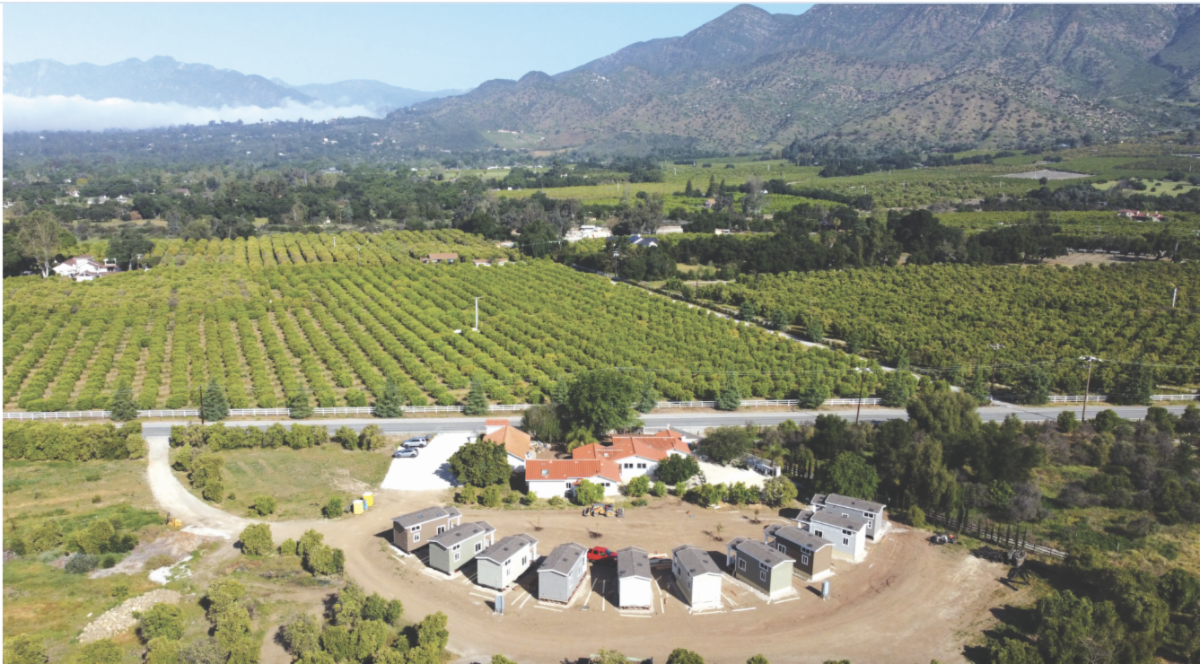
| Mesa, an Ojai non-profit co-founded by Dan Parziale and Kyle Thompson, has created a tiny home community in the Ojai Valley aimed at young adults ages 18-24 at risk of becoming homeless, including youths who have aged out of the foster care system. |
|
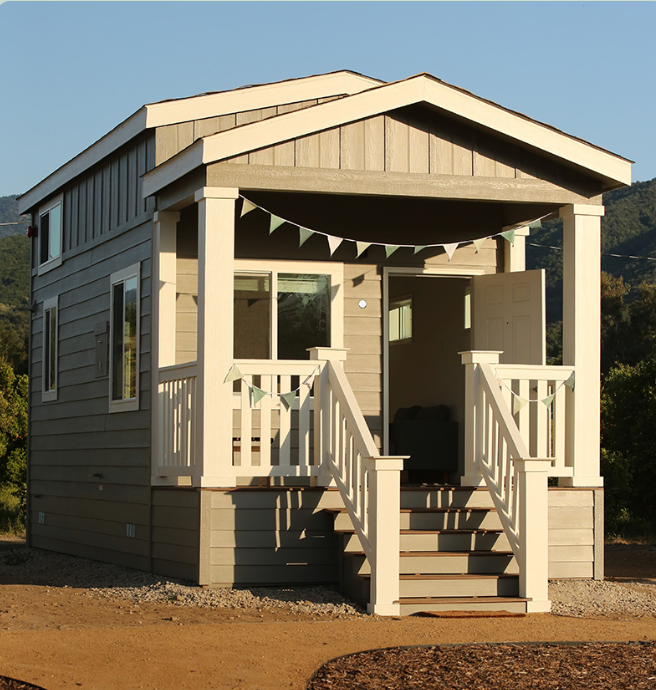
| The 10 tiny homes, located at 400 Gorham Road just east of Ojai city limits, were installed in April2024 and are now fully occupied. They are prefabricated modular units. Nine of the 10 houses are 260 square feet. One is 300 square feet for Americans With Disabilities Act purposes. |
|
|
|
The homes are furnished with a couch, coffee table, desk, chair, kitchen and bathroom, and residents will also have a laptop and Wi-Fi access.
Individualized wraparound services, including education, nutrition programs and health care, counseling, job training and permanent housing placement, are available in offices in the main house, which can also accommodate two more young adults. A television there (the only one on the property) provides an opportunity to create community. |
|
| Financing came from Project Homekey, the state’s program to expand housing opportunities for homeless people, which provided $4.2 million, and Ventura County which contributed $1.2 million of its American Rescue Plan Act money to initially support the project. Mesa has also raised $1.7 million through private fundraising. |
|
|
| Mesa works with the Ventura County Continuum of Care to find potential residents. They will be allowed to stay up to 24 months, depending on individual needs.
Photos courtesy of Staples Construction, general contractors for the project.
For more information on Mesa Farm: https://www.mesafarm.org |
|
|
Stepping Stones – Casa Pacifica’s Transitional Housing
|
|
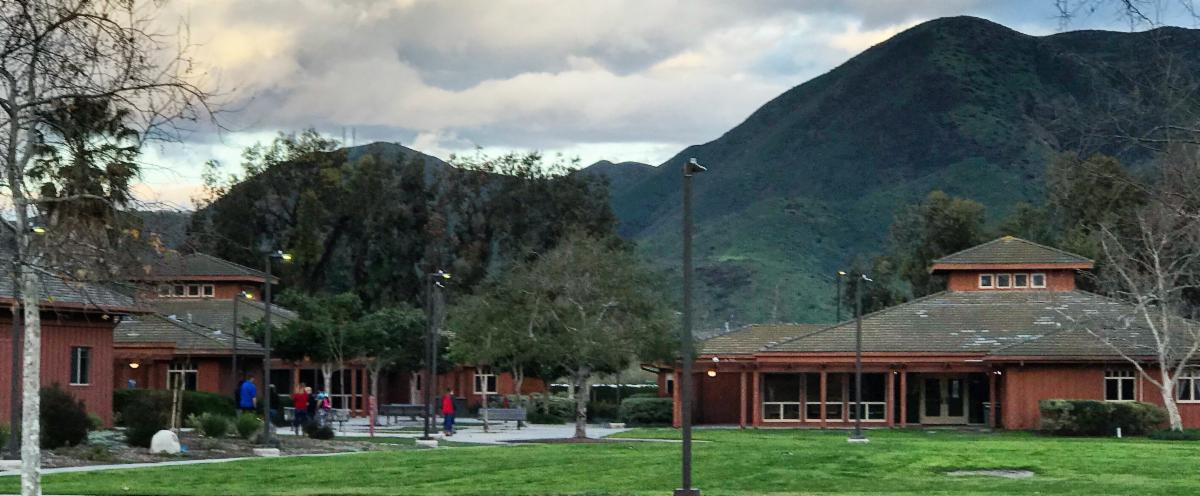
| Ventura County’s Casa Pacifica in Camarillo has served as a residential haven for abused, neglected and troubled children for decades. Over the years it became evident that transitional housing was needed for children aging out of the foster system. Their first housing project to address this was the conversion of two farmhouses on the property in 2015 to house 10 youth.
As the emphasis on keeping children at home with family counseling and support services became more prevalent, space became available in the residential cottages on campus originally used for young children. This provided an opportunity to renovate them to accommodate more older youth facing homelessness as they aged out of the foster care system.
Casa Pacifica’s campus conversion is the result of an innovative collaboration between the County of Ventura and Project Homekey, a statewide investment initiative for affordable housing. Funding included a $5.9 million grant from the state, contributions from Casa Pacifica donors, and an allocation by Ventura County of $640,000 from the American Rescue Plan Act. |
|
|
Reconstruction to adapt two residential cottages into the new format took six months and was completed in September 2024. A third cottage to accommodate young single parents with children will be completed in October 2025,creatinga total of 27 units nearly tripling the number of transitional age youth the agency can support.
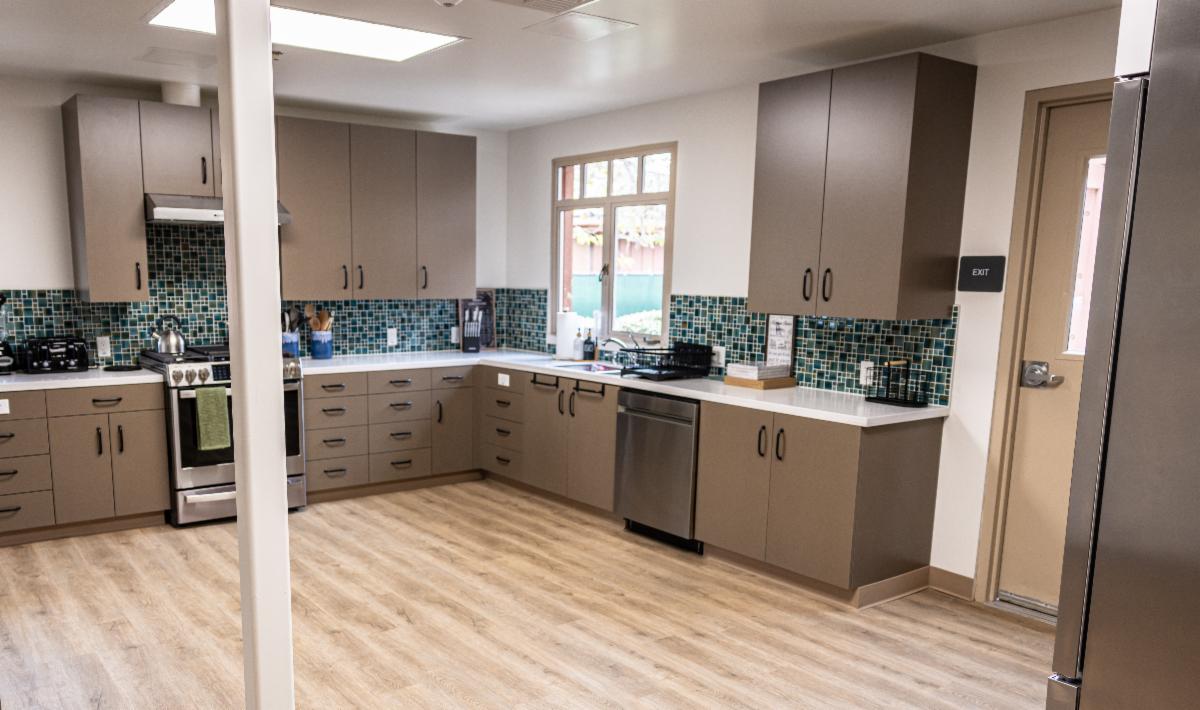
The new cottage layout provides fully furnished individual bedrooms with attached bathrooms that radiate around a community living room. |
|
| Residents have access to a pool and gym as well as specialty services such as equine and animal-assisted therapies. There are opportunities for supervised community activities such as trips to local museums, libraries and movie theaters. Transportation assistance is provided to help residents complete their education, find employment and attend medical and other health appointments.
Residents receive extensive on-site services to assist in their transition to self-sufficiency, including case management, education and career development, life skills training, social skills development and mental health services, through Casa Pacifica’s integrated Transitional Youth Services (TYS) program.
For more information on Stepping Stones and Casa Pacifica’s Transitional Youth Services program: https://www.casapacifica.org/transitional-youth-services/ |
|
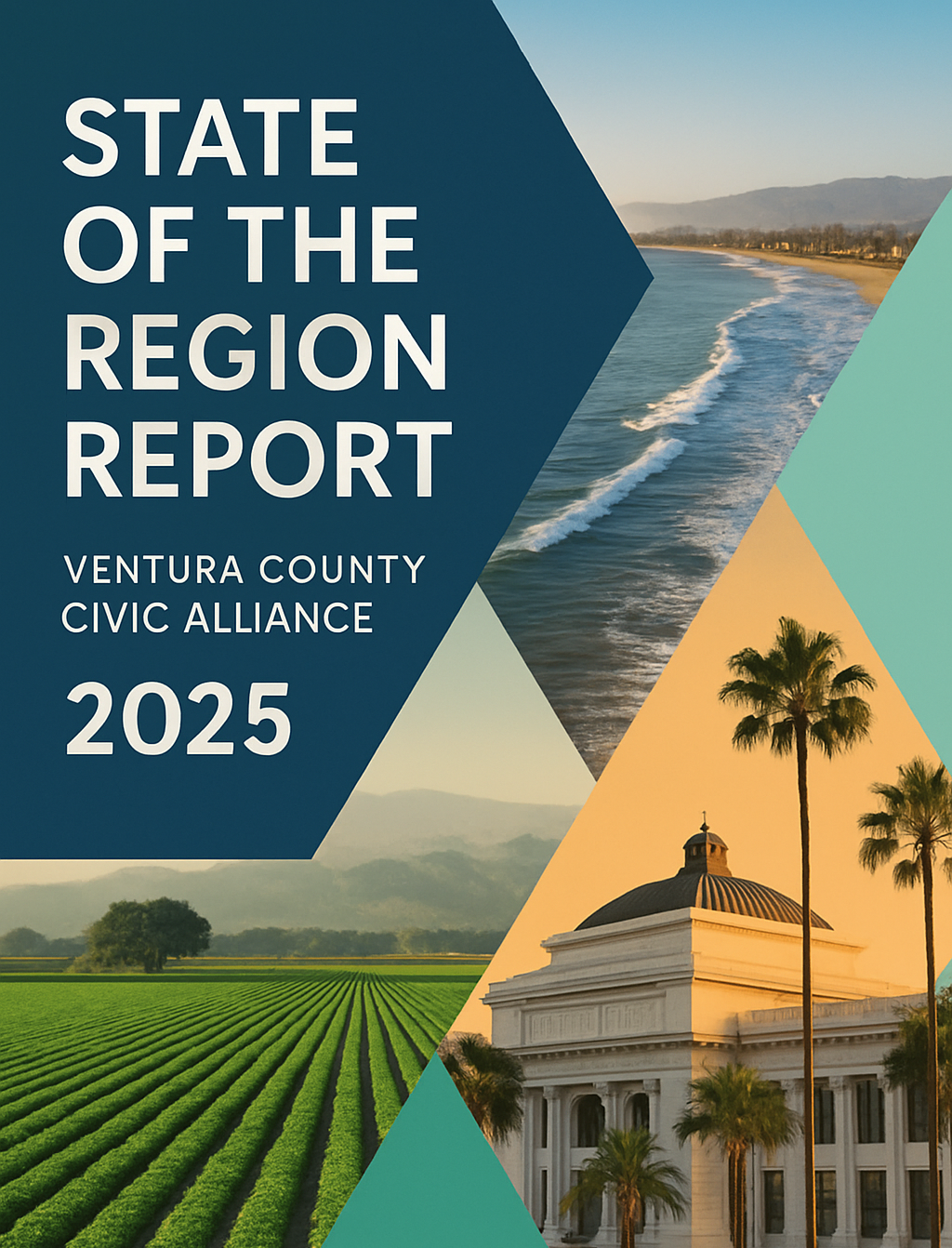
| The Ventura County Civic Alliance will release our 2025 State of the Region Report in mid-November.
The report, published every two years, chronicles key trends in Ventura County life including Agriculture, Economy, Education, Public Safety and six other domains.
All recipients of this newsletter will receive an email in September with details about the release event. |
|
|
The State of the Region Report, first published in 2002, is recognized for its unbiased research and thoughtful commentary regarding the quality of life in Ventura County. The report is distributed to elected officials, community and business leaders, education officials, local service organizations and many others.
The release event in November typically attracts 200 plus people. Attendees will hear the report’s author, Tony Biasotti, share highlights followed by a panel of local leaders participating in a moderated discussion about the data in the report and their observations about Ventura County. |
|
|
Thank you to our
State of the Region sponsors:
RESEARCH SPONSOR
|
|
|
TITLE SPONSOR
Ventura County Community College District
|
|
|
ManpowerGroup
Ventura County Credit Union
Bill & Elise Kearney
|
|
|
Acosta Wealth Management
Dyer Sheehan Group, Inc.
United Way
David Maron
Kate McLean and Hon. Steve Stone
Stacy and Kerry Roscoe
|
|
|
|
|