
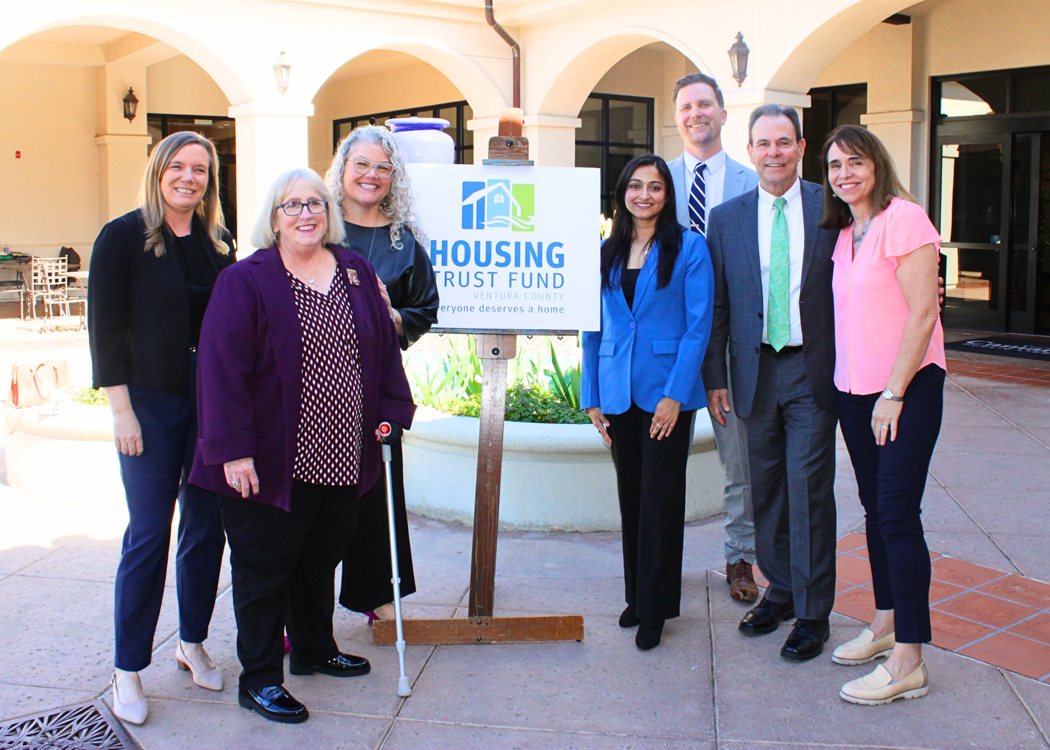
Courtesy photos.
VENTURA COUNTY — Housing Trust Fund Ventura County (Housing Trust Fund VC) convened business leaders, educators, healthcare providers, and civic stakeholders on February 25 at the Camarillo Public Library for its Annual Meeting, themed Together We Invest. The discussion centered on a clear economic reality: housing development is economic development.
“The lack of available housing, not just affordable housing, but available housing, is the single largest impediment to economic growth and prosperity in our region,” said Stephanie Caldwell, President & CEO of the Ventura Chamber of Commerce. “As Ken Trigueiro said, ‘Affordable housing is where the jobs go at night’.” These words framed the core theme of the morning: if workers cannot afford to live here, Ventura County’s economy cannot thrive.
 Panelists emphasized that without housing options for households earning approximately 60% to 120% of Area Median Income (AMI), the county risks losing the essential workforce that sustains it, including teachers, nurses, healthcare workers, tradespeople, public safety officers, and small business employees.
The panel discussion was moderated by Elena Brokaw, Chair of the Santa Paula Chamber and Barbara Barnard Smith Executive Director of the Museum of Ventura County, who guided a cross-sector conversation about how housing instability is affecting recruitment, retention, enrollment, productivity, and long-term economic resilience.
Panelists included:
- Danielle Borja, President & CEO, Greater Conejo Valley Chamber of Commerce
- Andy Conli, President & CEO, West Ventura County Business Alliance
- Dr. Rick MacLennan, Ed.D., Chancellor, Ventura County Community College District
- Dr. Gagan Pawar, CEO, Clinicas del Camino Real
- Stephanie Caldwell, President & CEO, Ventura Chamber of Commerce
In 2025 alone, Housing Trust Fund VC committed nearly $17 million in loans to support the development of affordable apartments and homes. Since 2013, the organization has invested close to $52 million countywide, contributing to the creation of 2,193 affordable housing units. Speakers stressed, however, that the conversation must move beyond production totals to workforce consequences and funding solutions.
 Panelists described a cross-sector strain driven by escalating housing costs, with average home prices approaching $941,000 and wages failing to keep pace. Employers, particularly small and mid-sized firms that anchor Ventura County’s economy, are struggling to attract and retain talent, while rising recruitment expenses, relocation incentives, and retention bonuses are proving unsustainable. At the same time, housing instability is undermining workforce development, with 58% of community college students facing housing insecurity last year and 24% experiencing homelessness, disrupting enrollment and completion rates. In healthcare, longer commutes, staff burnout, and turnover are increasing costs and reducing continuity of care. As young families and essential workers relocate outside the county, the result is a shrinking labor pool, enrollment declines, staffing shortages, and mounting pressure on the region’s economic infrastructure.
Panelists agreed that Ventura County cannot import talent while exporting its workforce. When teachers, nurses, healthcare workers, public safety professionals, and service employees must commute long distances or leave the region entirely, productivity declines, public services weaken, and economic resilience erodes.
“We need to solve this as a community,” said Linda Braunschweiger, CEO of Housing Trust Fund Ventura County. “Not in silos and not relying on government alone. It will take all of us working together to meet this challenge.”
Housing Trust Fund Ventura County is advancing practical solutions to address the region’s workforce housing needs. Through its Community Impact Note (CIN), individuals, businesses, and institutions can invest locally, with funds directed toward the development of affordable housing that supports essential workers across Ventura County. Because funds revolve back into future projects, the model creates sustained reinvestment that directly addresses the workforce housing gap. By investing in the Community Impact Note, businesses and residents can move from discussion to action, supporting housing solutions that allow Ventura County’s essential workers to live near their jobs.
By connecting local investment with housing production, the program helps strengthen local economies, support employers, and create more stable communities. Housing Trust Fund Ventura County continues to work in partnership with community leaders, organizations, and residents to expand access to housing and build a stronger future for the region’s workforce. To learn more about the Community Impact Note and how to invest in Ventura County’s future, visit https://www.housingtrustfundvc.org/cin/
Housing Trust Fund Ventura County – Housing Trust Fund Ventura County – Launched as a 501c3 nonprofit corporation in 2011, Housing Trust Fund VC is the local trusted leader in helping to increase affordable housing options throughout Ventura County by leveraging public-private partnerships to provide low-cost, flexible loans early in the housing development cycle. As of February 2025, Housing Trust Fund VC has committed to investing $52 million through its Revolving Loan Fund, creating 2,193 affordable apartments and homes for very-low, low-and middle-income individuals and families, transitional age foster youth, veterans, farm workers, seniors, and individuals experiencing homelessness.