

A new study finds that some features essential to the resiliency of Elkhorn Slough, a salt marsh-dominated coastal estuary in Monterey County, are improved by the return of sea otters and their insatiable appetite for herbivorous marsh crabs.
A new study finds that some features essential to the resiliency of Elkhorn Slough, a salt marsh-dominated coastal estuary in Monterey County, are improved by the return of sea otters and their insatiable appetite for herbivorous marsh crabs.
“Border Crossings: Exile and American Modern Dance 1900-1955,” opening Jan. 25 at the Art, Design & Architecture Museum, “rests on the idea that the immigrant, the asylum seeker, the exiled artist, shaped the language of dance modernism.” Performances by Jose Limón Dance Company, Santa Barbara Dance Theater and UCSB Dance Company, as well as a symposium, complement the exhibition.
View this email online January 18, 2024 Top News A global study reveals pathways to save threatened sharks, despite rising mortality trends Geographic protections and fishing regulations could improve what is currently a bleak outlook for sharks, but new policies…
Researchers reveal that eukaryotic organisms had already evolved into a diverse array of forms 1.64 billion years ago.
A multi-institution collaboration of scientists investigates the rise and fall in the abundance of kelp, and how it affects shorebirds.
Scientists decipher a cellular murder mystery in fruit flies, solving a human immunodeficiency. The discovery has the potential to enhance cancer immunotherapy.
As The Current winds down coverage for this calendar year, we round up and reflect on the five stories from 2023 that you visited most.
The Los Angeles-based architect’s 50-year career in organic architecture is the focus of the Art, Design & Architecture Museum’s current exhibition “From Within: The Architecture of Helena Arahuete.”
Written by Wendy Eley Jackson, a lecturer in film and media studies, “Napa Ever After” is part of an effort to create movies that appeal to African-American families, particularly women, and reflect the themes of love, romance and personal growth.
Research in California’s Northern Channel Islands provides strong evidence of the benefit of marine protected areas for the recreational scuba diving industry in Southern California and highlights that the diving community should be considered a key stakeholder in decision-making about the future of MPAs.
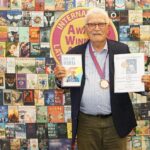
Professor Emeritus Francisco Lomelí and Osiris Aníbal Gómez Ph.D. ’20 won an International Latino Book Award for their work on the former poet laureate.
An updated and expanded edition of Curtis Rhodes’ work maintains its volume as a seminal textbook.
A comprehensive new analysis leverages AI to lay out how a UN plastics treaty — currently under negotiation — can achieve nearly zero plastic waste by 2040. Without intervention, say scientists, plastic pollution is set to rise 60% by 2050.
By organizing and selling access to their fisheries as a unit, African nations can make more from their fisheries on the global market, while protecting their seas’ biodiversity.
The religious studies professor turned politician will be remembered in a special event hosted by the Walter H. Capps Center for the Study of Ethics, Religion, and Public Life.
A conversation with Chat GPT, led by digital humanities scholar Fabian Offert, raises questions about how large language models think.
Biologist Cherie Briggs and geographer Ian Walker receive University of California Climate Action Grants to advance their respective efforts in restoration and conservation.
Curated by art history graduate students Graham Feyl and Sylvia Faichney, the exhibition — now on view at UCSB’s Art, Design & Architecture Museum — reimagines spaces such as discos, dive bars, living rooms and bathrooms through the lens of queer placemaking.
Scholars from across the nation convened on campus to discuss how to sort news from the noise through public-facing research and classroom conversations.
A Chumash cultural burn reignites ancient practice for wilderness conservation
Reviving a practice that had been lost for generations, the Chumash community and the university partner on a cultural burn at North Campus Open Space.
In “The Virus Touch,” the global studies professor explores relationships between viruses, humans, animals and the environment to show how various forms of media — from news content to lab test results — create our understanding of epidemics.

A powerful memoir of poetry and prose, “Loving in the War Years: Lo que nunca pasó por sus labios” explores the author’s interconnected identities as a lesbian and a Chicana, coming of age in a turbulent era of American politics and social change.
“When a child is separated from a parent, it impacts every facet of the child’s life in emotional, physical and financial ways,” said Silvia Rodriguez Vega, an assistant professor of Chicana and Chicano studies, whose new book considers hundreds of drawings by children living on the American side of the U.S.-Mexico border.
In her forthcoming book, and with support from the National Endowment for the Humanities, Kate McDonald illuminates the key role of people in the evolution of transport.
For answers, John Protzko and his team looked to philosophers, professionals and laypersons. Their conclusions could help answer moral and legal questions if scenarios in today’s science fiction ever become reality.
The nonprofit co-founded at UC Santa Barbara teams with Direct Relief to provide efficient and clean sources of light and electricity to the Maui community left decimated by wildfires.
The new issue of Written Names Fanzine, which chronicles occurrences of hyper-localized, unsanctioned public writing, features found names stuck in bubblegum in San Luis Obispo.
The idea has gained scientific consensus: Dogs can be just as good — and sometimes better — than our best tests at detecting the stealthy virus and its variants, even when they are obscured by other viruses, like colds and flu.
The jewels in the crown of the collection held by the Art, Design & Architecture Museum — plucked from the coastal forests and deserts of California Modernism — are its nearly 290 archives of architects, landscape architects and industrial and graphic designers practicing in Southern California.
Using an Afrocentric and critical race theoretical framework, lead author Sharon Tettegah and co-authors Alison Cerezo, Terrance Wooten and DeLeon Gray review the works of four prominent Black psychologists.
“The culture in which a person grows up can impact the interpretation of the event,” said UC Santa Barbara professor emeritus Ann Taves. “And certain cultures can encourage people to watch out for and expect to experience these things.”
While they confer many ecological benefits, marine protected areas do not shield against the effects of prolonged elevated water temperatures.
Resource managers are increasingly turning toward prescribed burns as a tool for land maintenance and restoration — and for reducing the risk of wildfires.
Remarkably well preserved after 11,000 years, the botanical materials at El Gigante reflect the transition from foraging to farming, providing a rare glimpse of early foraging strategies and changes in subsistence.
“Pomp & Circumstance” on repeat, thousands of cap-and-gown-clad grads wended their way from the Thunderdome, across the bike path, behind Hatlen Theater, toward the lagoon and onto Commencement Green to the cheers of family and friends.
The first of a series of events celebrating the campus’s newest crop of graduates shined a spotlight on CCS, the “graduate school for undergraduates.”
The Promise Scholar is graduating as a double major and is next set to join the university’s intensive Teacher Education Program on a full ride.
Between the overlapping arrangement of two lattices, physicists find some interesting material behaviors that have never been seen before
Major new antibiotics research has significant implications in the fight against bacterial resistance.
After a rainy winter, folks are flocking to see California’s superblooms. But, experts say, smart management strategies will be required if we want to continue enjoying these spectacular events in the future.

View this email online. April 20, 2023 Top News Composer João Pedro Oliveira is awarded a Guggenheim “All of us at UC Santa Barbara are fortunate to have a colleague of such talent and expertise in our Music Department,” said…
The recently completed Interactive Learning Pavilion is the campus’s first new dedicated classroom building in more than 50 years.

The productivity of brine flies is tied to overall health of salt lake ecosystems; both are in decline.
Research in Moorea shows the presence of coral skeletons influences reef recovery after bleaching.
The Gevirtz Graduate School of Education is awarded a record grant for K-12 mental health services.
Doctoral candidate Elizabeth Driscoll Smith receives a dissertation fellowship to research the impact of transportation on midcentury American folk art.
A new book by sociology professor France Winddance Twine offers firsthand accounts of inequality in Silicon Valley and centers the experiences of Black and Latinx women.
Researchers prove that tough, woody lignin can be broken down in an anaerobic environment.
The UCSB Dance Company explores the spectrum of human sensibility through the lens of female choreographers.
The Carsey-Wolf Center screens the restored Ukrainian classic “Shadows of Forgotten Ancestors.”
A new Carsey-Wolf Center initiative shines a light on the influence and impact of Black artists.
Ecologist Leander Anderegg receives an award for research on the interplay between plant physiology and ecosystem dynamics.
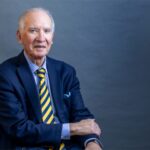
Among the first generation of professionally trained historians to excavate and record Chicano and Chicana history, UC Santa Barbara professor Mario T. García helped set the foundation for emerging scholars during the past half century.
His body of work as a self-described liberationist historian aiming to inspire progressive social change includes more than a dozen books and several edited collections, all of which advance the inclusion of the poor and oppressed, and spotlight the leaders of social justice movements.
García’s legacy will be the focus of a special symposium as part of the sixth bi-annual Sal Castro Memorial Conference(link is external), Feb. 17–18, in the McCune Conference Room of the campus’s Humanities & Social Sciences Building. Named after Salvador “Sal” Castro, a high school social studies teacher who helped lead the historic 1968 Chicano student walkouts to protest bias and inequalities in the Los Angeles Unified School District, the conference is free and open to the public.
Guest speakers will cover recent books about the Chicano movement, plus history, art and culture. The symposium on García’s work will include a keynote video presentation about his life and career, a panel discussion on civil rights leadership and reflections on his work’s impact on graduate students and fellow academics.
Feminist studies postdoctoral scholar Caleb Luna centers fat experiences in cultural critique through research, podcast and poetry.
Marine scientists compile the first detailed description of the species living on and around a rare underwater habitat.